
Regions
Regions cover the whole Field Guide — every place has exactly one. Each carries its own map.
-
 Region · 28 entries
Europe & the North Atlantic
Old stone and cold water: castles and caves, pilgrim roads and island monasteries, glaciers and sea cliffs, in land that people have worked and built on for thousands of years.
-
 Region · 25 entries
North America
Canyons, geysers and great waterfalls, big tides and giant trees, polar bears on the bay, and a walled city above a river.
-
 Region · 24 entries
Latin America & the Caribbean
Glaciers and salt flats, rainforest, reef and great waterfalls, a canal between two oceans, and the works of peoples who built here long before Europeans arrived.
-
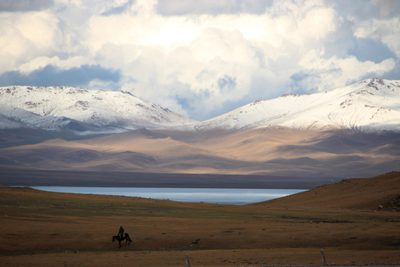 Region · 29 entries
Asia
Temple cities and mountain shrines, limestone towers and vast caves, high pastures and island coasts, from the steppe to the tropics.
-
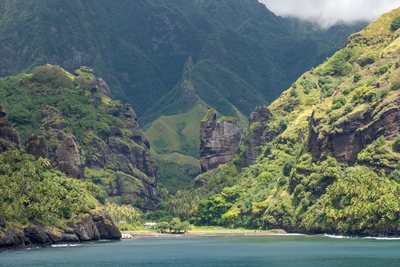 Region · 24 entries
Oceania & the Pacific
Remote islands and atolls, ancient dry country, young volcanic ground, and the marae and stone figures of the peoples who crossed the open ocean between them.
-
 Region · 9 entries
The Poles
The far south and the far north: ice and open ocean, short seasons and long crossings.
-
 Region · 21 entries
Africa
Dunes, deltas and salt pans, great rivers and big wildlife, mud-brick villages and a storytellers' square, and volcanic islands off the coasts.
Collections
Collections cross and subdivide the regions, because some places make more sense together: how a season works, how a route runs, what an area is actually like. A place can belong to several.
-
 Collection · 7 entries
The Antarctic & Southern Ocean
No country, no visa, no scheduled service — how the expedition season actually works.
-
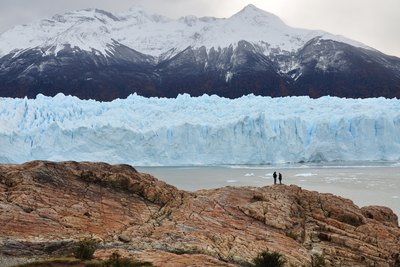 Collection · 6 entries
Patagonia
One name, two countries: ice and granite in the west, desert and whale coast in the east.
-
 Collection · 8 entries
Canada
The highest tides on Earth, the planet's mantle above ground, and wild country so large that much of it is known only from the air.
-
 Collection · 10 entries
The US National Parks
Each park a different reason the idea of a national park caught on.
-
 Collection · 5 entries
French Polynesia
Five archipelagos and an ocean the size of Europe.
-
 Collection · 15 entries
Australia & New Zealand
Old dry country and young volcanic ground, remote islands and long coasts, and wildlife found nowhere else.
-
 Collection · 11 entries
Waterfalls
Rivers at the point where they fall, and what the drop does to the land, the wildlife and the people around it.
-
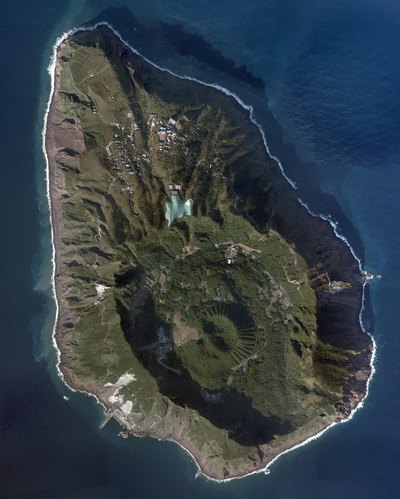 Collection · 11 entries
Volcanoes
Active volcanoes and the ground older ones left behind, and the ways people and wildlife live with them.
-
Collection · 13 entries
Deserts
Dry country of many kinds, from dunes and salt lakes to stony plains, and what people and wildlife have made of it.
-
 Collection · 29 entries
Sacred & ancient places
Places people have held sacred or built to last, from Stone Age villages to monasteries still in use.
All entries
 Entry № 001
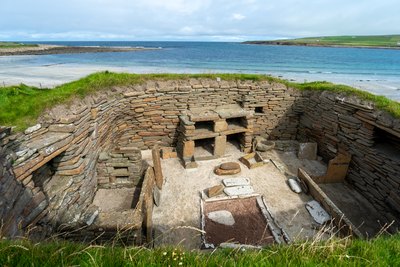
Skara Brae
A Neolithic village of eight stone houses, buried in sand for four thousand years and uncovered in a single night by the storm of 1850.
 Entry № 002
The Wadden Sea
The largest unbroken tidal flat on Earth, where twice a day the North Sea withdraws far enough to walk across its floor to an island.
- Entry № 003
Aogashima
Around 170 people living inside an active double caldera, cooking with volcanic steam, on an island the ferry usually cannot reach.
 Entry № 004
Gros Morne Tablelands
A slab of the Earth's mantle pushed to the surface — orange, barren, and part of the evidence that proved plate tectonics.
 Entry № 005
Chiloé
Sixteen wooden churches raised without iron nails by island shipwrights, and a ghost ship people still half-believe in.
 Entry № 006
The Drake Passage
Two days of open water where the largest current on Earth meets no land at all — and the gap whose opening let Antarctica freeze.
- Entry № 007
South Georgia
King penguins in the hundreds of thousands, a rusting whaling station, and the grave where every passing ship still stops to raise a glass.
- Entry № 008
Port Lockroy
The world's most southerly post office, on an island the size of a football pitch, staffed by four people and a thousand gentoo penguins.
- Entry № 009
Fakarava
A UNESCO Biosphere Reserve atoll whose southern pass holds hundreds of grey reef sharks stacked in the current — visible even to snorkellers.
- Entry № 010
The Marquesas
Vertical volcanic islands with no reef to soften the Pacific, monumental stone tiki, and two famous graves above Atuona.
 Entry № 011
The Aletsch Glacier
The longest ice in the Alps — and the valley wall it was buttressing, which began to move once the glacier thinned.
- Entry № 012
Sequoia National Park
The largest tree on Earth by volume, and a species whose cones can stay sealed for twenty years and open only in fire.
 Entry № 013
Cueva de las Manos
Hundreds of hands stencilled on a canyon wall in blown pigment. More than nine in ten are left hands, and one has six fingers.
- Entry № 014
Perito Moreno Glacier
A glacier that has dammed an arm of the lake, held the water back for years, and then lost, and that is now retreating.
 Entry № 015
Acadia National Park
The national park private citizens bought back acre by acre and gave away — with 45 miles of roads built to keep cars out.
 Entry № 016
Škocjan Caves
A river vanishes into a plateau and resurfaces near the Adriatic. The route in between has never been fully mapped.
- Entry № 017
Torres del Paine
A granite laccolith built in ninety thousand years and sliced open by ice — and, contrary to many sources, not a World Heritage Site.
 Entry № 018
Península Valdés
Orcas that throw themselves onto the beach on purpose to hunt, using a technique the adults teach the young.
 Entry № 019
Isle Royale
A wilderness island in Lake Superior where wolves and moose have been counted every year since 1958 — the longest predator-prey study on Earth.
 Entry № 020
The Dry Tortugas
Sixteen million bricks, seventy miles out to sea: the largest brick structure in the Americas, never finished and never attacked.
- Entry № 021
Katmai & Brooks Falls
Brown bears stand at the lip of a waterfall catching leaping salmon — the most honest queue in nature, with a platform for watching it.
 Entry № 022
Fernandina
The youngest Galápagos island: no introduced species ever, an active volcano, the biggest marine iguanas — and a tortoise that hid for 113 years.
 Entry № 023
Kaikōura
A deep-sea canyon starts almost at the beach, so sperm whales feed year-round within sight of a town whose name means 'eat crayfish'.
 Entry № 024
Lord Howe Island
An island capped at 400 guests at a time, with the world's southernmost coral reef and the tallest sea stack on Earth next door.
 Entry № 025
The Bay of Fundy
The highest tides on Earth: walk the ocean floor at low water, paddle over your footprints six hours later.
- Entry № 026
Nahanni
Náįlįcho, a waterfall twice Niagara's height, and four great canyons in a roadless reserve — among the first UNESCO sites ever listed.
 Entry № 027
The Osa Peninsula
The most biologically intense place on Earth, by National Geographic's famous description — tapirs at the ranger station, macaws over the beach.
 Entry № 028
Coober Pedy
The opal capital of the world solved the desert sun by moving underground — homes, churches, hotels, and a golf course with no grass at all.
 Entry № 029
Pico
Portugal's highest mountain in the mid-Atlantic, with UNESCO vineyards walled in black lava and whales off the old whaling coast.
 Entry № 030
Mykines
The westernmost Faroe: vast puffin colonies, the islands' only gannets, and a lighthouse across a sea gorge.
 Entry № 031
Sedona
Sandstone stained by rust, a chapel grown from a cliff, and a town named for the postmaster's wife.
 Entry № 032
The Iberá Wetlands
Shining waters where jaguars walk free again after seventy years — rewilding's great showcase, patrolled by unbothered capybaras.
- Entry № 033
Sossusvlei & Deadvlei
A forest that died six centuries ago and never fell — black trees on white clay beneath the rusted-red dunes of Earth's oldest desert.
 Entry № 034
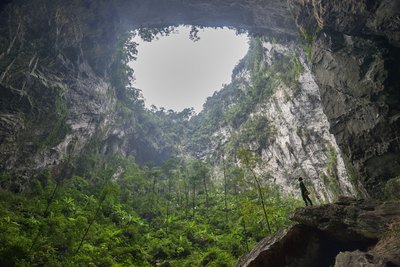
Hang Sơn Đoòng
The world's largest cave keeps its own clouds and grows its own jungle — found by a farmer sheltering from a storm, then lost for eighteen years.
 Entry № 035
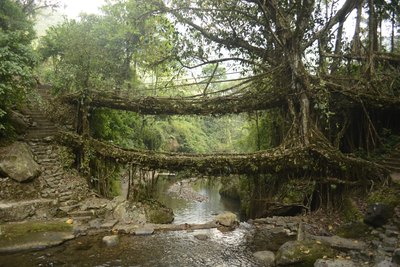
Living Root Bridges
In the wettest inhabited place on Earth, the Khasi grow bridges from living fig roots — architecture that heals itself and strengthens with age.
- Entry № 036
Song-Köl
A lake two miles up with no town and no trees — only a season: yurts and herds arrive each June, and by October it all belongs to the wind again.
 Entry № 037
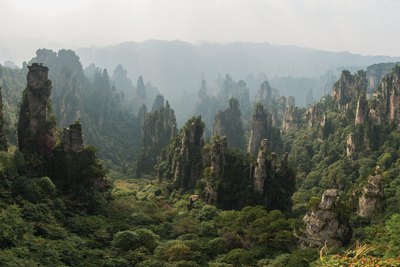
Zhangjiajie & Wulingyuan
Three thousand stone towers wearing trees for hats — when the mist rises past their feet, whole mountains cast off and float.
 Entry № 038
Þingvellir
A parliament founded in 930 met for eight centuries on a valley floor that was steadily sinking and splitting beneath the argument.
 Entry № 039
Dominica
Too steep for sugar, so the forest stayed — and offshore, sperm whale families live year-round instead of migrating.
 Entry № 040
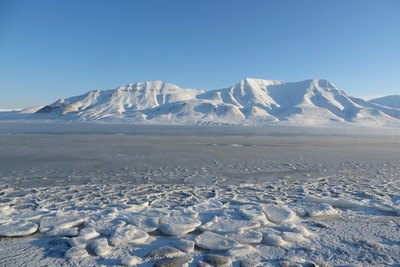
Svalbard
Four months without a sunrise, forty-six nationalities free to move in, and the world's spare seeds sealed inside a mountain.
 Entry № 041
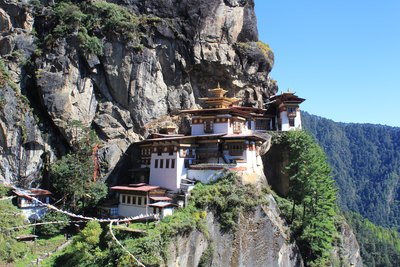
Paro Taktsang
A monastery glued to a rock wall nine hundred metres above the valley, in a country that writes its forests into its constitution.
 Entry № 042
Cappadocia & Derinkuyu
Rock soft enough to carve and firm enough to hold a ceiling — so when armies came, whole communities went eighteen storeys down.
 Entry № 043
Lofoten
Harbours that refuse to freeze at 68° north, and a thousand-year export trade built on one fish keeping an appointment.
 Entry № 044
Plitvice Lakes
Sixteen lakes held back by dams that moss, algae and bacteria are still building, roughly a centimetre or two a year.
- Entry № 045
Meteora
A river delta turned to stone and stood on end, with fourteenth-century monasteries on the flat bits.
 Entry № 046
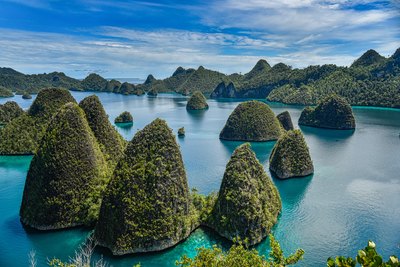
Raja Ampat
The highest reef biodiversity ever recorded, on islands that also happen to be made of battery metal.
 Entry № 047
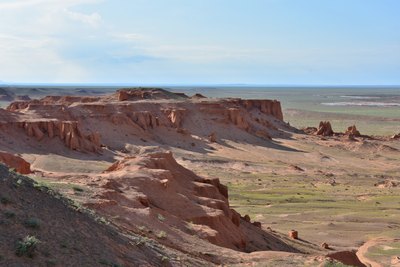
The Flaming Cliffs
In 1923 a team here found the first dinosaur eggs anyone recognised as such, and science blamed the wrong animal for stealing them for seventy years.
 Entry № 048
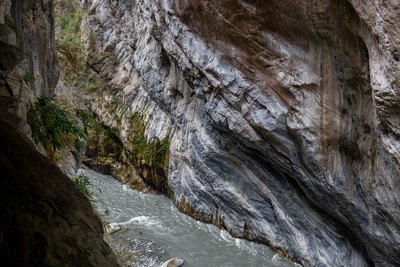
Taroko Gorge
A river cuts through solid marble while the island keeps rising to meet it — and since 2024, the gorge has been carefully putting itself back together.
 Entry № 049
The cenotes of the Yucatán
An asteroid cracked the bedrock in a ring 66 million years ago; the sinkholes tracing that ring today are far younger than the shortcut version says.
 Entry № 050
The Okavango Delta
A flood sourced a thousand kilometres away arrives exactly when Botswana's dry season leaves nothing else wet.
 Entry № 051
Cirque de Mafate
Around eight hundred people live inside a collapsed volcano with no road — everything they own arrived on a back or under a helicopter.
 Entry № 052
The Makgadikgadi Pans
A salt flat on the floor of a lake that outlived its rivers, and the zebra still cross it twice a year.
 Entry № 053
Etosha
A pan so barren that water becomes the scarce thing, so the animals queue for it rather than scatter across the park.
 Entry № 054
Chã das Caldeiras
A village farming inside an active crater, rebuilt on the lava that buried it in 2014 though the state said not to.
 Entry № 055
Vallée de Mai
A palm forest holding the largest seed on Earth, which had a mythology for centuries before anyone found the tree.
 Entry № 056
SG̱ang Gwaay
Cedar mortuary poles left to lean, weather and fall — because the Haida Nation decided they should, and UNESCO's listing accepts it.
 Entry № 057
Mammoth Cave
The longest cave known, and still growing. The 1972 connection that made it so was already on an enslaved guide’s map, drawn from memory in 1842.
 Entry № 058
The Hopewell Ceremonial Earthworks
Earthworks aligned to a lunar cycle of 18.6 years — a pattern nobody could establish alone, since a person sees only about three of them in a lifetime.
 Entry № 059
Wood Buffalo National Park
Bigger than Switzerland, with the only wild nesting ground of the whooping crane and a beaver dam found from orbit — and 4,000 visitors a year.
 Entry № 060
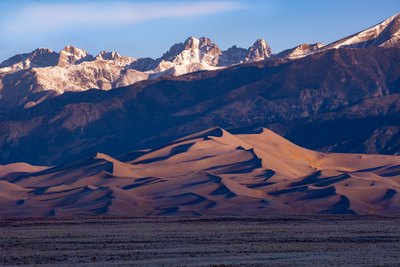
Great Sand Dunes
The tallest dunes in North America exist because two creeks carry the escaping sand back. In late spring one of them runs in waves, every twenty seconds.
 Entry № 061
Hamelin Pool
Microbes have built rock here since before anything could eat them. They survive because the water is twice as salty as the sea.
- Entry № 062
Purnululu
Beehive domes striped orange and black, standing only because a living skin of bacteria binds sandstone that would otherwise fall apart.
 Entry № 063
Tongariro
Three sacred volcanoes given to the Crown in 1887 to stop them being sold — and the first cultural landscape ever inscribed on the World Heritage List.
 Entry № 064
Rakiura
No stoats, so the kiwi feed in daylight — which is how kiwi used to be everywhere. Also the southernmost Dark Sky Sanctuary on Earth.
 Entry № 065
Kati Thanda–Lake Eyre
A salt pan most of the time. When floodwater finally arrives from Queensland, pelicans appear in their tens of thousands, and nobody knows how they know.
 Entry № 066
The Florida Keys
A hundred and thirteen miles of highway across open water, built on the piers of a railroad a hurricane destroyed in 1935. The old bridges still run alongside.
 Entry № 067
St John
Sixty per cent of the island is national park, and the forest everyone calls pristine is second growth over terraced sugar plantations.
 Entry № 068
Upper Svaneti
Stone towers built one per family, entered by a ladder you pulled up behind you — defences against invaders, and against the family next door.
 Entry № 069
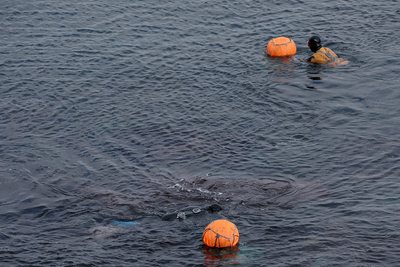
The haenyeo of Jeju
Women who dive to twenty metres on one breath, by rule and without tanks. Over 4,500 of them in 2013; about 2,600 by the end of 2024.
 Entry № 070
Scoresby Sund
The largest fjord system on Earth, with one town of about 350 people at its mouth — placed there in 1925 to establish a claim.
 Entry № 071
The Saloum Delta
Mangrove islands that are partly made of shells: 218 mounds of discarded cockles and oysters, piled up over two thousand years. Some of them are cemeteries.
 Entry № 072
Príncipe
A tiny equatorial island where a 1919 eclipse photographed through cloud helped make Einstein famous — on a cocoa estate with a much harder history.
 Entry № 073
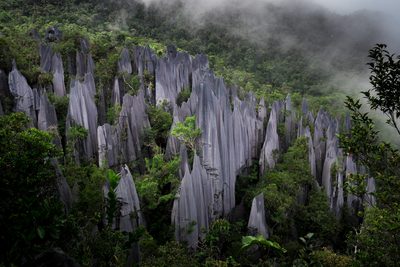
Gunung Mulu
No road in, some of the largest caves on Earth, and millions of bats pouring out of one at dusk. Several of its famous records are out of date.
 Entry № 074
Nan Madol
Around a hundred artificial islets walled with basalt columns stacked like logs, on a reef off Pohnpei. The coral inside its first tomb dates it to about 1180.
 Entry № 075
Deception Island
The best harbour in the South Shetlands is the flooded crater of an active volcano. Ships sail in through a gap in the cliffs, and the beach steams.
- Entry № 076
Victoria Falls
Classed as the largest sheet of falling water on Earth, and a waterfall that keeps walking upriver: the zigzag canyon below it is where it used to be.
- Entry № 077
Machu Picchu
The best-known ruin in the Americas, and possibly not called Machu Picchu at all: two scholars argue that name came from an American's 1911 publications.
 Entry № 078
Salar de Uyuni
The largest salt flat on Earth, level enough that space agencies test satellites against it, and a mirror when it rains.
 Entry № 079
The Nazca Lines
Hundreds of huge lines and animal figures scratched into a Peruvian desert, still being found: in 2024 AI helped confirm 303 new ones.
 Entry № 080
The Great Blue Hole
A perfectly round hole in a Caribbean reef, and a flooded cave: the stalactites in its walls prove it was dry when the ice ages had drawn the sea down.
 Entry № 081
The Giant’s Causeway
About 40,000 basalt columns stepping into the sea. They helped settle whether basalt comes from water or from volcanoes, and a tray of drying cornflour grows the same pattern.
 Entry № 082
Venice
The lagoon that protects Venice was kept a lagoon on purpose: for nearly two centuries the Republic dug new beds to carry rivers and their silt around it. Now the barrier faces the other way.
 Entry № 083
Neuschwanstein
Built as one shy king's retreat from public life, closed to outsiders while he lived, and opened to the public seven weeks after he died. The throne it was built around was never made.
 Entry № 084
The Alhambra
A palace whose rooms speak in the first person: the Alhambra's court poets wrote verses for the walls, and the Fountain of the Lions describes its own water. Its famous tile-symmetry claim is less settled.
 Entry № 085
Malta
Paired grooves cut into the bare limestone, crossing like a rail yard at 'Clapham Junction' and running into the sea at Birżebbuġa. Nobody agrees who made them or when.
 Entry № 086
The Great Barrier Reef
The world's largest reef system has died five times in 30,000 years, stranded as the sea fell and drowned as it rose, and survived each time by moving. The reef you swim over is less than 10,000 years old.
 Entry № 087
Milford Sound / Piopiotahi
So much rain falls here that fresh water floats on the sea like a lid, and deep-sea black coral grows within a diver's reach. The boats pass right over it.
 Entry № 088
The Twelve Apostles
Named for tourists, never twelve, and now seven: the stacks were carved in the last few thousand years, and the only extra Apostles anyone has found stand drowned offshore.
 Entry № 089
Aoraki / Mount Cook
Measured at 3,764 metres for a century, New Zealand's highest mountain lost ten metres in a night in 1991 and thirty more since. To Ngai Tahu it is an ancestor, not a summit.
 Entry № 090
The Blue Mountains
Not mountains but a sandstone plateau cut into gorges, blue because of its eucalypts and World Heritage-listed for them. One canyon hid a tree known only from fossils until 1994.
 Entry № 091
The Grand Canyon
Nearly two billion years of rock, and a hole cut through it that geologists still date three ways: 70 million years for part of it, 5 to 6 million for the whole, or a lake that spilled.
 Entry № 092
Yellowstone
The colours around Yellowstone's hot springs are living microbes. From one small pool off the boardwalks came the bacterium whose enzyme made copying DNA practical.
 Entry № 093
Niagara Falls
A treaty sets how much water goes over Niagara Falls: twice as much by day in the tourist season as at night. The rest goes through tunnels to power stations, and in 1969 the American Falls was turned off.
 Entry № 094
Banff
Canada's national parks began with a quarrel over a hot spring in 1885. The spring is now closed to bathers, because it is the main home of a snail found nowhere else.
 Entry № 095
Churchill
Polar bears gather at Churchill each autumn to wait for Hudson Bay to freeze. The ones that come into town can be held by the province until the ice forms, then let go onto it.
 Entry № 096
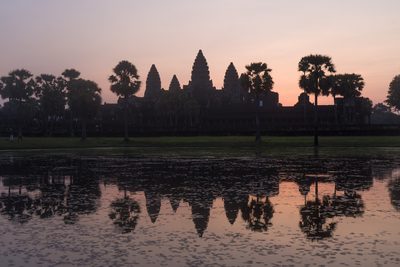
Angkor Wat
The famous building is one temple. Lidar flown in 2012 showed the forest around it hides a planned city of embankments, ponds and roads, and the temple was built into the grid.
 Entry № 097
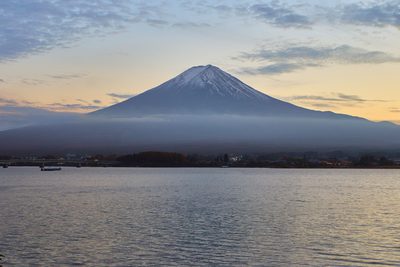
Mount Fuji
The summit of Japan's national symbol is shrine land: the state took it after the Meiji Restoration, the Supreme Court ruled for the shrine in 1974, and it was handed back in 2004. The prefectural border across the top was never drawn.
 Entry № 098
The South Pole
The pole stays put; the ice on top of it moves about ten metres a year. So every New Year's Day the station's people mark the pole again, with a marker made by hand over the winter.
 Entry № 099
The Avenue of the Baobabs
The giant baobabs along the road north of Morondava did not grow as an avenue. They are what remains of a forest cleared for farming, and the land around them is poor ground for young trees.
 Entry № 100
Ilulissat Icefjord
The glacier behind Ilulissat's icebergs slowed and thickened from 2016 as the sea cooled, then sped up again from 2018 before the warm water came back. Its biggest icebergs still queue on a ridge at the fjord's mouth.
 Entry № 101
Vatican City
The smallest country in the world meets Italy along a white stone line across St Peter's Square. By the 1929 treaty the square is the Vatican's, and on an ordinary day Italian police keep order in it.
 Entry № 102
Santiago de Compostela
A pilgrimage made since the ninth century, waymarked since 1984 by a parish priest's yellow arrows and proved with a book of stamps, ending at a granite cathedral in Galicia.
 Entry № 103
Ephesus
One of the great ports of the Roman world, left inland by its own river. Ephesus moved more than once to follow a coastline that silt kept pushing west.
 Entry № 104
Ronda
A town on both lips of a gorge, joined by a bridge 98 metres high that was built of stone cut from the bottom of the gorge itself. It is called the New Bridge, and it was finished in 1793.
 Entry № 105
Patmos
In 1088 a Byzantine emperor granted a small Aegean island to a monk. He built a monastery with battlements above the harbour, and a white town grew up around its walls.
 Entry № 106
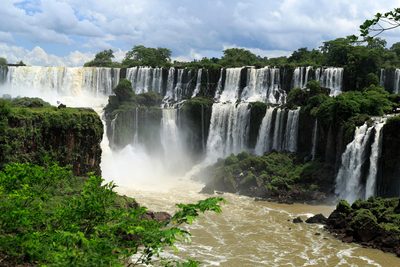
Iguazú Falls
Argentina's park counts 275 falls; other accounts give 150 to 300, because the number depends on the river. The same river wrecked the walkway to the Devil's Throat in 2023, and it was taken apart again in 2026 before an expected flood.
 Entry № 107
Kruger National Park
South Africa's first national park turned 100 in 2026. It is named for President Paul Kruger, and historians have argued since 1994 about how much he had to do with it.
 Entry № 108
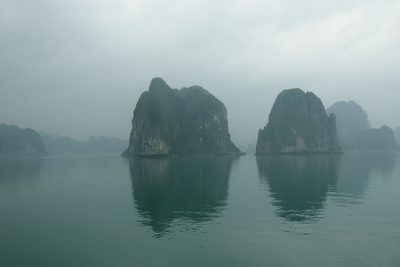
Ha Long Bay
A limestone tower landscape that the sea has flooded: UNESCO calls it the most extensive marine-invaded tower karst on Earth. Every island carries a notch the tide has dissolved at its foot.
 Entry № 109
Bora Bora
Visitors still land on an airstrip US forces built on a reef islet in 1943 for a wartime fuel base, then cross the lagoon by boat. For years it was French Polynesia's only international airport.
 Entry № 110
Ross Ice Shelf
The largest ice shelf on Earth, a floating slab about the size of France, ends in a cliff more than 600 km long. Ships sail south until they meet it, and the record for the farthest south keeps moving.
 Entry № 111
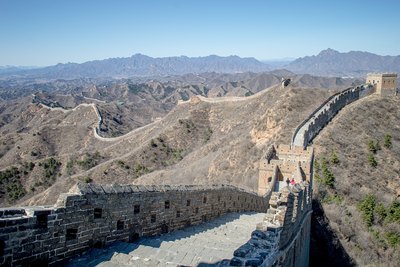
The Great Wall
Not one wall but thousands of sections, trenches and towers built over two thousand years, of whatever the ground offered. China's own survey of its Ming line counts hills and rivers as part of it.
 Entry № 112
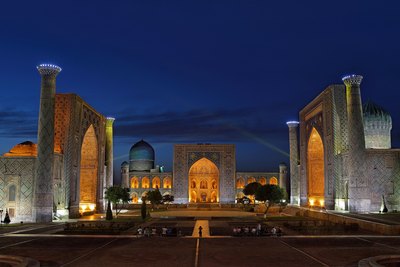
Registan
Three tiled madrasas facing each other across Samarkand's central square. When a minaret of the oldest began to lean in 1918, the engineer of Moscow's radio tower set it straight in 1932.
 Entry № 113
Table Mountain
The only mountain with a constellation named after it, drawn in the 1750s by a French astronomer working below it. Its flat top was once the floor of a valley.
 Entry № 114
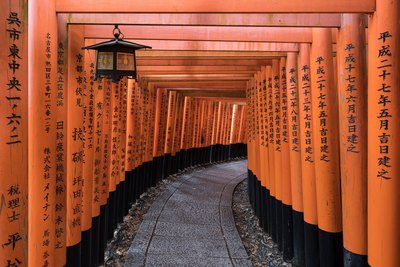
Fushimi Inari Taisha
The tunnels of vermilion gates on the Inari shrine's mountain are offerings, given since the Edo period for prayers made or answered. The giver's name is on the back of each.
 Entry № 115
Atacama Desert
The driest non-polar desert on Earth, whose soil near Yungay passed Viking-style tests for Mars in 2003, until another team grew microbes from it. In a wet year its southern end flowers.
 Entry № 116
Lençóis Maranhenses
White dunes on Brazil's north coast fill with freshwater lagoons every rainy season. The dunes move up to 25 metres a year, so the lagoons come back each year somewhere else.
 Entry № 117
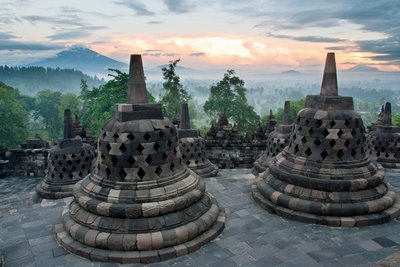
Borobudur
Borobudur's first chapter, 160 carved panels on cause and effect, lies behind a later stone base. It was photographed once, in 1890–91, and covered again; one corner is open.
 Entry № 118
Kīlauea
After its summit collapsed in 2018, Kīlauea's crater filled with groundwater. The lake grew for seventeen months, until lava broke in one December night in 2020 and boiled it off in about ninety minutes.
 Entry № 119
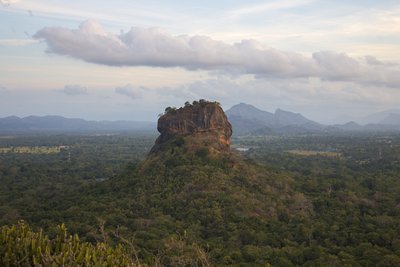
Sigiriya
Visitors to Sri Lanka's Lion Rock scratched verses into its polished Mirror Wall between the 8th and 10th centuries. Hundreds survive, including one from a man who declined to write a poem.
 Entry № 120
McMurdo Dry Valleys
Antarctica's largest ice-free region, where a glacier leaks brine sealed underneath it for perhaps two million years. It comes out clear and turns red in the air.
 Entry № 121
South Luangwa
In Zambia's Luangwa Valley, visitors were first taken out on foot in the 1950s. The river loops into lagoons that have held some of the densest hippo numbers recorded.
 Entry № 122
Taputapuātea
On Raiatea, a marae at the centre of an old alliance of islands. UNESCO records that stones were carried from it to found marae of the same name elsewhere.
 Entry № 123
Jemaa el-Fnaa
The great square of Marrakesh is protected for what happens on it, not what stands round it. A writer's campaign to save it helped create UNESCO's list of oral heritage.
 Entry № 124
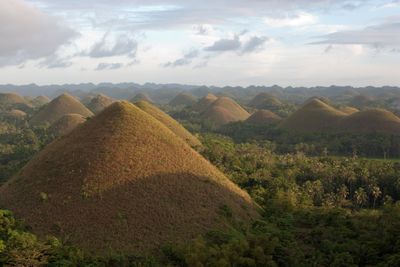
The Chocolate Hills
Rounded limestone mounds rise out of the rice fields of Bohol by the hundred and turn brown in the dry season. Three official counts give three different totals.
 Entry № 125
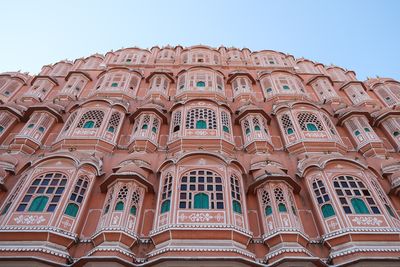
Hawa Mahal
A Jaipur landmark that is mostly a screen: five storeys of latticed windows over a bazaar street, built in 1799 so royal women could watch the city unseen.
 Entry № 126
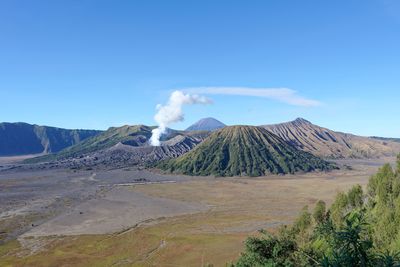
Mount Bromo
An active volcano standing in a plain of grey volcanic sand inside an older crater in East Java. The sand sea has been a nature reserve since 1919, and the Tenggerese carry offerings to the crater every year.
 Entry № 127
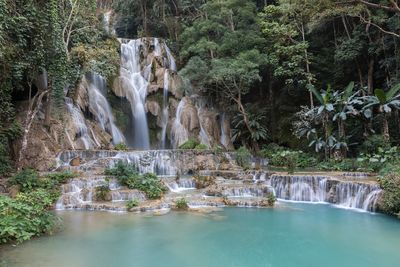
Kuang Si Falls
A waterfall outside Luang Prabang that spills through a staircase of milky blue pools over pale stone the water laid down itself, with rescued moon bears and sun bears dozing beside the path.
 Entry № 128
The Meeting of the Waters
Below Manaus, the black Rio Negro and the pale, muddy Solimões run side by side in one channel for kilometres without mixing, and the river that leaves is the one Brazil calls the Amazon.
 Entry № 129
Gocta Falls
A waterfall of 771 metres in two drops in northern Peru, in full view of the villages below it, which the wider world heard of only in 2006, together with a world ranking disputed ever since.
 Entry № 130
Moorea
The jagged island facing Tahiti, whose native tree snails were lost in the wild, bred in zoos and carried home, each with a dot of paint. The ones found without a dot were born there.
 Entry № 131
The Panama Canal
A shortcut between two oceans that lifts every ship 26 metres on fresh water from a lake, then lets the water run to the sea. When the rain fails, fewer ships cross. Bound for the Pacific, a ship sails south-east.
 Entry № 132
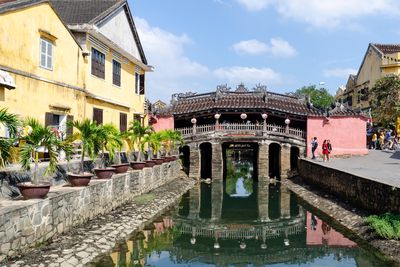
Hội An
A trading port that lost its trade when its river silted, and so kept its timber houses, its assembly halls and a little covered bridge with a temple on it. The river still floods the old town most autumns.
 Entry № 133
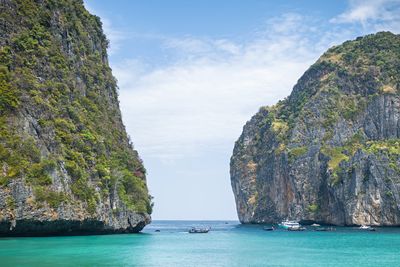
Maya Bay
A cove on a limestone island in the Andaman Sea, reshaped for a film and then overrun, closed for three and a half years to recover and reopened with swimming banned. Its shallows are now a nursery for blacktip reef sharks.
 Entry № 134
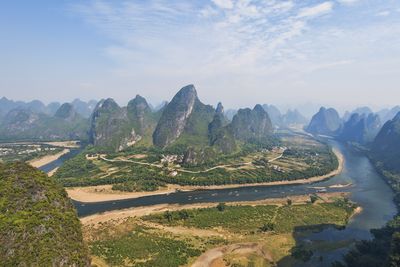
The Li River
A river winding between limestone towers that rise one by one from flat green fields, from Guilin down to Yangshuo. One bend near Xingping is on the back of China's 20-yuan note, and people stand there holding the note up to the view.
 Entry № 135
Aït Benhaddou
A fortified hillside village of rammed earth and mud brick in southern Morocco. Its families have mostly moved across the river, and what keeps its walls standing is restoration, helped along by the film crews that keep returning.
 Entry № 136
Ushuaia
Argentina's southernmost city calls itself the world's. Across the Beagle Channel, Chile's Puerto Williams lies about 15 km farther south and has counted as a city since 2019.
 Entry № 137
Chobe National Park
In the dry season elephants of Africa's largest population come down to the Chobe River by the family. In the river is a grassy island Botswana and Namibia took to the World Court.
 Entry № 138
Marble Caves
On a Patagonian lake big enough to raise real waves, the water has hollowed a marble shore into chapels and tunnels, and glacial silt in the water turns the walls blue.
 Entry № 139
Lac Rose
Senegal's pink lake gets its colour from an alga that blushes under salt and sun. After the 2022 floods it went green; by 2025 it was pink again.
 Entry № 140
The Pinnacles
Thousands of limestone pillars in yellow sand north of Perth, called a desert where it rains most winters. In 2024 iron nodules on the pillars were used to date them.
 Entry № 141
Yosemite
For most of a century a waterfall of burning embers was pushed off a Yosemite cliff every summer night. The Park Service stopped it in 1968. Each February the sun now sets a real waterfall alight.
 Entry № 142
Mont-Saint-Michel
A raised causeway nearly turned this tidal island into land. A dam that stores the sea and then lets it go, and a bridge on piles, are making it an island again on the biggest tides.
 Entry № 143
Stonehenge
Everyone looks at Stonehenge’s standing stones. The six-tonne slab lying in the middle was traced in 2024 to north-east Scotland, at least 750 km away.
 Entry № 144
Prague
Every hour a skeleton rings the bell on Prague’s astronomical clock. The legend of the clockmaker blinded for building it is told about a man who did not.
 Entry № 145
Arches
More than 2,000 sandstone arches stand over a buried salt bed in Utah. One fell in the night in 2008, and the Park Service says new ones form about as fast as old ones fall.
 Entry № 146
Crater Lake
A lake in the collapsed top of a volcano, with no river in or out: rain and snow keep it full. It is the deepest in the United States, and until the end of 2028 nobody can walk down to it.
 Entry № 147
Quebec City
The only walled city north of Mexico nearly pulled its walls down in the 1870s. A governor general stopped it, and the gates you walk through were rebuilt afterwards, wider and for show.
 Entry № 148
Gullfoss
A glacial river that turns and drops twice into a canyon. A farmer's daughter fought the plan to dam it and stands above it in stone; the lease itself died when the rent stopped.
 Entry № 149
Our Lady of the Rocks
An islet in the Bay of Kotor made of dropped stones and sunken ships, around a reef where, by tradition, seamen found an icon in 1452. Every July the town goes out and adds more.
 Entry № 150
Easter Island
Hundreds of stone ancestors that Rapa Nui stories say walked to their places. Two archaeologists roped a replica and walked it, and the argument over how is not quite over. You visit with a local guide.
 Entry № 151
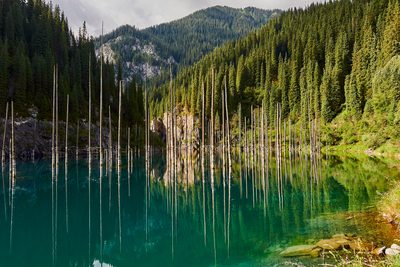
Lake Kaindy
A mountain lake that an earthquake made in a single night in 1911, drowning a spruce forest where it stood. The trunks still rise from the water, pale above and green below.
 Entry № 152
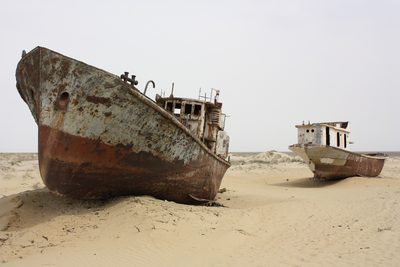
Moynaq
A fishing port on the Aral Sea until the rivers that fed the sea were diverted for cotton. The water has gone out of sight; the town's fishing boats lie rusting on the sand, and the town is still lived in.
 Entry № 153
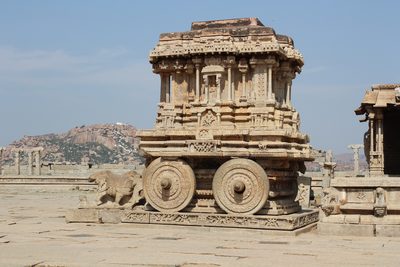
Hampi
The ruined capital of the Vijayanagara Empire, among granite boulders on the Tungabhadra. Its stone chariot is on India's fifty-rupee note, and its oldest temple never stopped holding worship.
 Entry № 154
Kolmanskop
A diamond town in the Namib, built after a railwayman picked up a stone in 1908. It had a ballroom, an X-ray station and free ice delivered daily; since 1956 the sand has been moving in.
 Entry № 155
Liuwa Plain
A grassland in western Zambia that a Lozi king protected in the 1880s. More than 47,000 wildebeest gather on it with the first rains, and about 12,000 people still live inside the park.
 Entry № 156
Loango
A stretch of Gabon's Atlantic coast where elephants, buffalo and hippos walk out of the forest and the lagoons onto the beach. A National Geographic photographer made its hippos in the surf famous.
 Entry № 157
Horizontal Falls
Two narrow gaps in a range of hills on the Kimberley coast, where tides of up to about ten metres heap the sea up on one side and pour it through. To the Dambimangari it is Garaan-ngaddim, a powerful, sacred place.
 Entry № 158
Rock Islands
Hundreds of green limestone islands in a turquoise lagoon, many worn away at the waterline into mushrooms, with a lake of golden jellyfish among them. Every visitor signs a promise to Palau's children before they are let in.
 Entry № 159
Jalapão
A remote stretch of Brazilian savanna with orange dunes, clear rivers and springs that push swimmers back to the surface, and a golden grass that the quilombola village of Mumbuca turned into a craft.
 Entry № 160
Colca Canyon
A gorge in the southern Peruvian Andes where condors rise past the rim in the morning and the valley is stepped with terraces older than the Inca. In 1586 its two peoples told the Spanish they shaped their children's heads after mountains.
Know somewhere that belongs here?
The Field Guide grows by recommendation. If there is a place you love — somewhere strange, overlooked, or simply worth the trip — tell us about it and why it matters. Good suggestions get researched, written up, and credited to the person who sent them in.
Suggest a place →More entries are being written. · Sign the expedition log to hear when they land.