
- Where
- West Greenland, 250 km north
of the Arctic Circle, on Disko Bay - Coordinates
- 69.1667° N
51.1000° W - Fjord
- About 40 km long,
from the ice sheet to the sea - Glacier
- Sermeq Kujalleq (Jakobshavn Isbræ);
calves more than 35 km³ a year - Settled
- About 4,000 years, at Sermermiut:
Saqqaq, Dorset and Thule cultures - Status
- UNESCO World Heritage, 2004
- Best visited
- Summer for light and boats;
late winter for snow and sleds
Walked out along planks over soft ground and black berries, past a hillside of sled dogs howling for their dinner, to the edge of a fjord so full of ice there was no water left to see. The icebergs were the size of towns and talked all night, groaning and cracking, in a light that stayed gold. I went to bed not believing any of it.
The short answer
Ilulissat Icefjord runs about 40 kilometres west from the Greenland ice sheet to Disko Bay, beside the town of Ilulissat, 250 kilometres north of the Arctic Circle. It is the sea mouth of Sermeq Kujalleq, also known by its Danish name Jakobshavn Isbræ, one of the few glaciers through which the ice sheet reaches the sea. UNESCO’s description, from its 2004 inscription, is that the glacier calves more than 35 cubic kilometres of ice a year, about 10 per cent of all Greenland’s calved ice and more than any other glacier outside Antarctica. The icebergs take 12 to 15 months to push down the fjord, and the deepest collect over a ridge of rock at its mouth before they float free into the bay. People have lived beside it for about 4,000 years.
Why it's worth knowing
For about twenty years Sermeq Kujalleq stood for a warming Greenland: it sped up, thinned and retreated. Then it did something that surprised the people measuring it.
From 2016 the glacier slowed, thickened and advanced. Ala Khazendar of NASA’s Jet Propulsion Laboratory and colleagues, using data from NASA’s Oceans Melting Greenland mission, reported in Nature Geoscience in 2019 that the change matched a cooling of Disko Bay: in its upper 250 metres the bay had cooled to temperatures not seen since the mid-1980s, and the cool water had come from the North Atlantic. NASA reported the glacier thickening by 20 to 30 metres a year between 2016 and 2019. NASA’s own account was that the change was temporary, and that when the ocean warmed again the glacier would most likely resume accelerating and thinning.
It did not wait for the ocean. In 2025 Picton and colleagues reported in the Journal of Geophysical Research: Earth Surface that the glacier began to speed up again in 2018, and that its mean annual speed near the front rose by 49 per cent between 2018 and 2021. The re-acceleration began before warmer water arrived, and they attribute it mainly to the glacier’s own thinning: with less ice pressing down, the glacier slid over its bed more easily. The glacier that went into reverse was steered first by the ocean, and then by its own weight.
That is why the fjord matters to science: it is measured closely enough for surprises to show. UNESCO’s inscription recognised the combination of a huge ice sheet and a fast-moving ice stream calving into an iceberg-filled fjord, a phenomenon seen only in Greenland and Antarctica.
The field notes
The queue at the mouth
A ridge of bedrock, a sill, crosses the mouth of the fjord. UNESCO’s description is that bergs deep enough to touch it accumulate over the sill until they are pushed or floated off, and Visit Greenland describes the largest running aground on the ridge it calls Isfjeldsbanken. Wikipedia adds that some bergs are too tall to float down the fjord and lie stuck on its shallower parts, sometimes for years, until they break up. The result is a jam of icebergs at the fjord’s entrance, in full view of the hills by the town.
A glacier measured by the day
Wikipedia gives the glacier’s speed as 20 to 35 metres a day, and the ice in the fjord as up to about 250,000 years old. Its behaviour has been tracked for decades from satellites, aircraft and ships, which is how both the slowdown from 2016 and the speed-up from 2018 were seen as they happened. Neither settles where it goes next.
Four thousand years at Sermermiut
Near the town is Sermermiut, where Wikipedia records remains of three cultures, Saqqaq, early Dorset and Thule, over about 4,000 years. People in Ilulissat still fish the fjord for Greenland halibut and hunt ringed seals in it, mostly in winter, often travelling by dog sled on the ice.
At the edge of town, the Ilulissat Icefjord Centre, Kangiata Illorsua, opened in July 2021. Designed by the Danish architect Dorte Mandrup, it has a curving wooden roof that doubles as a viewing platform and the start of the World Heritage trail into the Sermermiut valley towards the fjord.
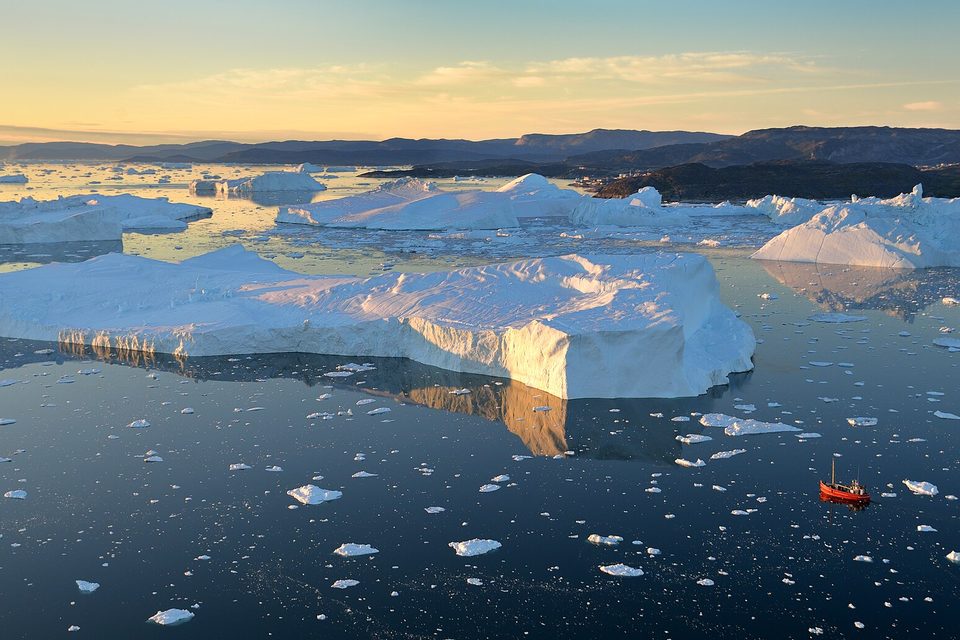
A small red boat among icebergs in the icefjord, July 2013.
Photograph: Greenland Travel · Sailing in the Icefjord · CC BY 2.0 · cropped
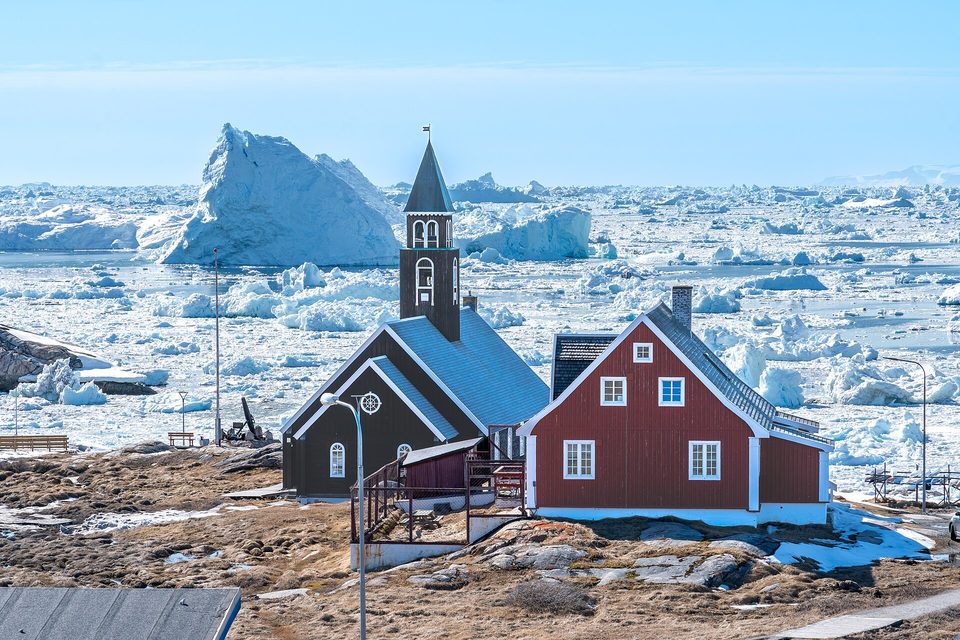
Zion's Church in Ilulissat with icebergs in the bay behind it, May 2024.
Photograph: Ekrem Canli · CC BY-SA 4.0 · cropped
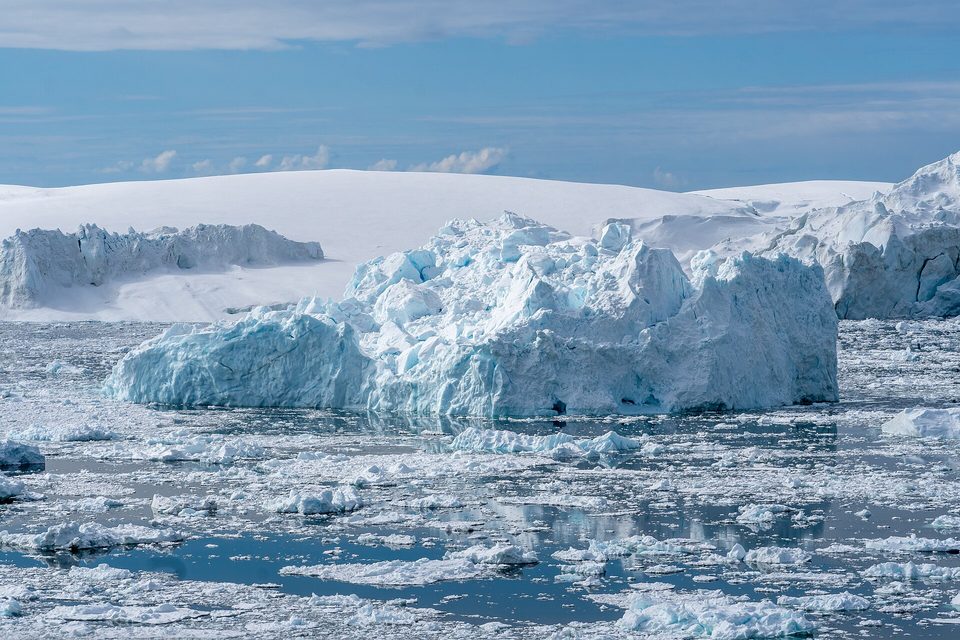
An iceberg among brash ice in the Ilulissat Icefjord (Kangerlua), May 2024.
Photograph: Ekrem Canli · CC BY-SA 4.0 · cropped
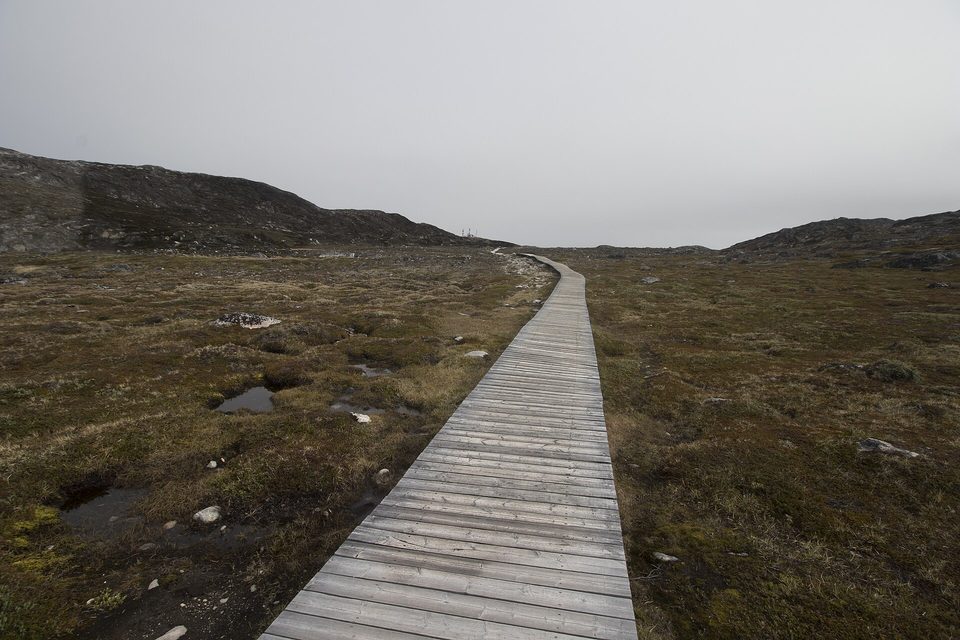
The boardwalk trail from Ilulissat toward the icefjord, July 2018.
Photograph: Buiobuione · CC BY-SA 4.0 · cropped
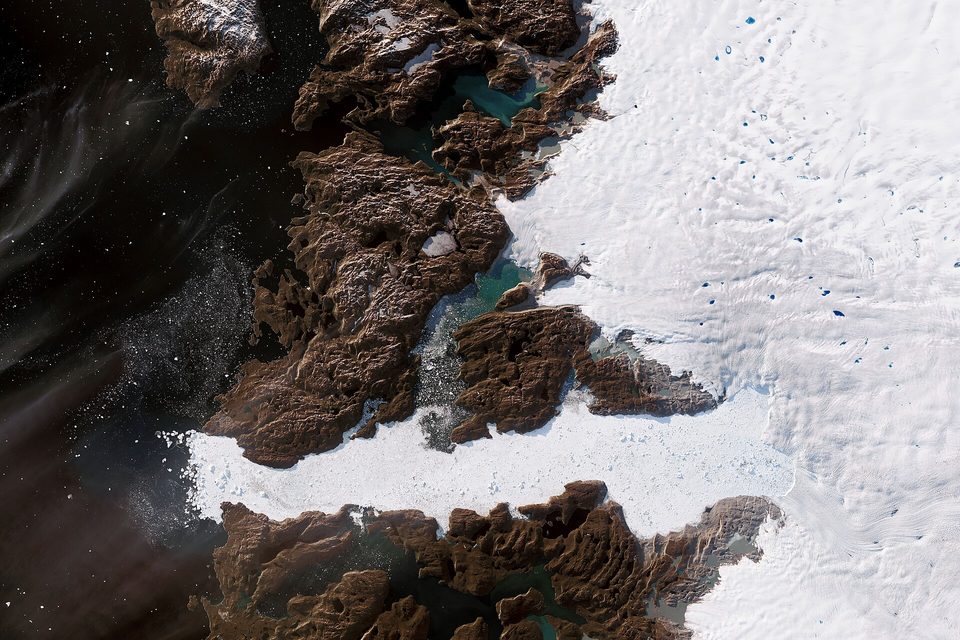
Jakobshavn Glacier and the head of the icefjord from Landsat, June 2019 (NASA Earth Observatory, satellite image).
Photograph: NASA Earth Observatory image by Joshua Stevens, using Landsat data from the U.S. Geological Survey · Public domain · cropped
- Stay up for the light at night. You can sleep somewhere else.
- Walk the planks out of town and sit at the edge for longer than you planned. The ice talks if you wait.
- Leave the working dogs alone, however much they ask. They are not pets, and they belong to somebody.
- Take a boat out among the ice at the mouth of the fjord, and let the skipper decide how close.
- Pick the biggest iceberg. (Picked one. Found a bigger one behind it. The icebergs now have a page of their own, and they will not keep still long enough to be crossed off.)
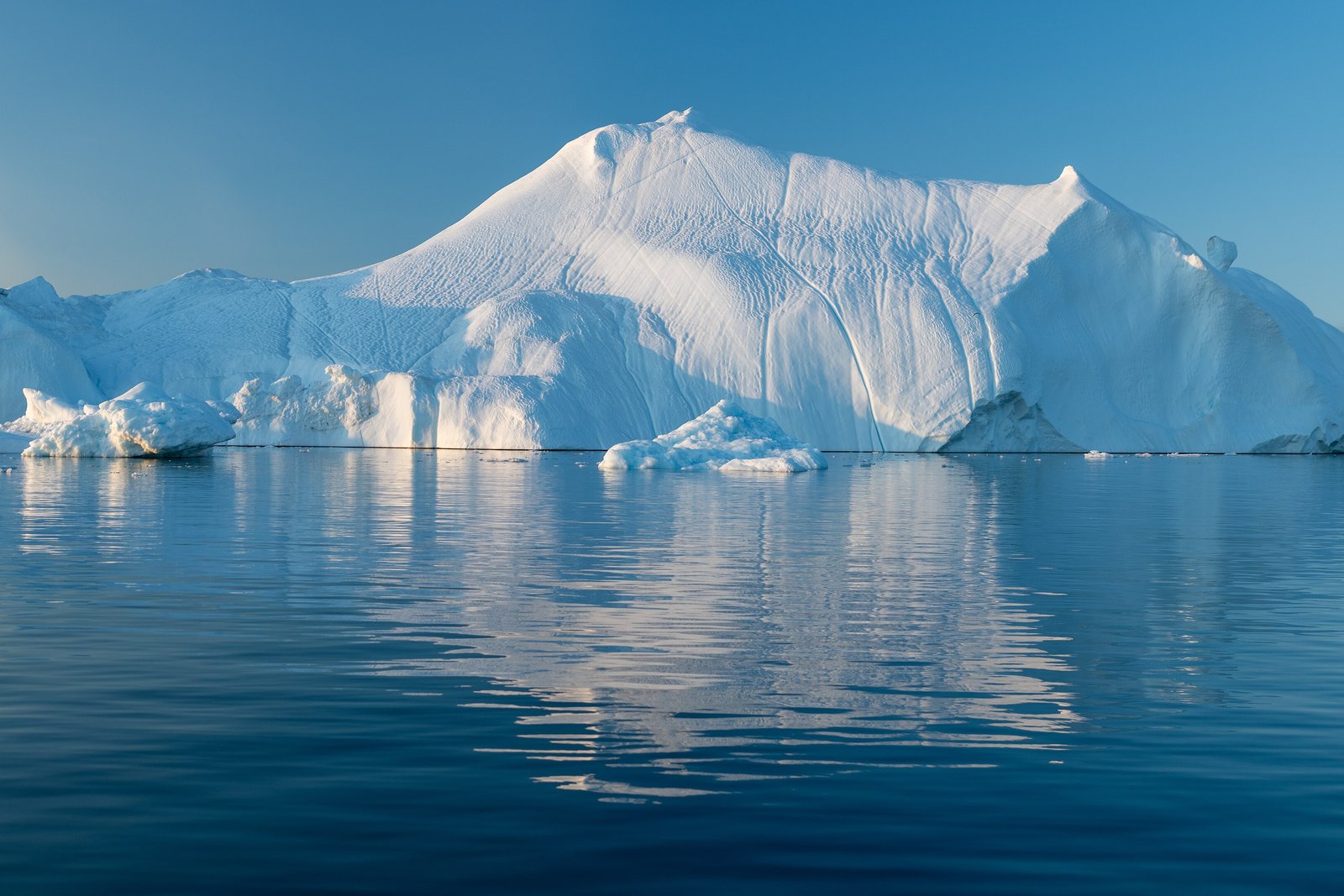
The icebergs on the sill. At the mouth of Ilulissat Icefjord, where a ridge of bedrock crosses the fjord, the biggest icebergs from Sermeq Kujalleq run aground and wait until the ice behind pushes them over or they break small enough to float free. From the hills by the town they look like a white city blocking the harbour. They are the glacier’s output, a year or more after it calved, queuing at the door.
Tally, in the marginThe biggest icebergs I have ever seen, all stuck in the doorway, waiting for the ones behind to push. I thought for a whole afternoon they were islands.
Getting there
How to get there. Ilulissat is reached by air. Air Greenland flies there from other Greenland airports, including Nuuk and Kangerlussuaq, which connect to Copenhagen. A new airport at Ilulissat with a 2,200-metre runway is due to open in late 2026, and Air Greenland plans a direct Ilulissat–Copenhagen route from 29 October 2026. In summer, ships also call.
Seeing the fjord. From the Icefjord Centre, trails lead through the Sermermiut valley to viewpoints over the fjord and its mouth. Boat trips run among the icebergs in the bay, and flights go over the glacier front.
When to go. Summer for long light, open water and boats; late winter for snow and dog sleds. The weather can change fast in any season.
Safety. The State Department has Greenland at Level 2 because of extreme weather and limited emergency services, and notes that search and rescue can take several days to reach remote sites. Stay on the marked trails, keep well back from the water’s edge, and travel with a professional operator beyond the town.
Mark this place
Common questions
What is Ilulissat Icefjord?
Ilulissat Icefjord is a fjord about 40 kilometres long in west Greenland, 250 kilometres north of the Arctic Circle, running from the Greenland ice sheet to Disko Bay beside the town of Ilulissat. It is fed by the glacier Sermeq Kujalleq (Jakobshavn Isbrae), which UNESCO says calves more than 35 cubic kilometres of ice a year. UNESCO inscribed it as a World Heritage Site in 2004.
Why did Jakobshavn Glacier slow down?
From 2016 Jakobshavn Isbrae, the glacier feeding Ilulissat Icefjord, slowed, thickened and advanced. Ala Khazendar of NASA’s Jet Propulsion Laboratory and colleagues reported in Nature Geoscience in 2019 that the upper 250 metres of Disko Bay had cooled to temperatures not seen since the mid-1980s, with the cool water coming from the North Atlantic, and linked the change to that cooling.
Is Jakobshavn Glacier speeding up again?
Yes. Picton and colleagues reported in the Journal of Geophysical Research: Earth Surface in 2025 that Jakobshavn Isbrae, the glacier feeding Ilulissat Icefjord, began to speed up again in 2018, with its mean annual speed near the front rising 49 per cent between 2018 and 2021. The speed-up began before warmer water returned, and they attribute it mainly to the glacier’s own thinning.
Why do icebergs pile up at the mouth of Ilulissat Icefjord?
A ridge of bedrock, a sill, crosses the mouth of Ilulissat Icefjord. UNESCO says icebergs take 12 to 15 months to push down the fjord and, if deep enough, collect over the sill until they are pushed or floated off; Visit Greenland describes the largest running aground on the ridge called Isfjeldsbanken. The result is a crowd of grounded icebergs at the fjord’s entrance.
How fast does the glacier at Ilulissat move?
Sermeq Kujalleq, the glacier that feeds Ilulissat Icefjord, flows at 20 to 35 metres a day, according to Wikipedia, and UNESCO says it calves more than 35 cubic kilometres of ice a year, about 10 per cent of all the ice calved in Greenland and more than any other glacier outside Antarctica.
How do you get to Ilulissat?
By air. Air Greenland flies to Ilulissat from other Greenland airports, including Nuuk and Kangerlussuaq, which connect to Copenhagen. A new airport at Ilulissat with a 2,200-metre runway is due to open in late 2026, and Air Greenland plans a direct Ilulissat–Copenhagen route from 29 October 2026. Ships also call in summer.
How long have people lived at Ilulissat Icefjord?
About 4,000 years. The Sermermiut site near Ilulissat holds remains of three cultures, Saqqaq, early Dorset and Thule, according to Wikipedia. People in Ilulissat still fish the fjord for Greenland halibut and hunt seals there. The Ilulissat Icefjord Centre, opened in July 2021, stands at the start of the trail into the Sermermiut valley.
Is there a travel advisory for Greenland?
Yes. The U.S. State Department has Greenland at Level 2, exercise increased caution, because of extreme weather and limited emergency services (29 October 2024), noting that search and rescue can take several days to reach remote sites. It recommends a professional guide or operator, such as an AECO member. The Kingdom of Denmark has a separate Level 2 advisory for terrorism.