SockMonkey.com™The places worth knowing

Field Guide › Interests › Wildlife

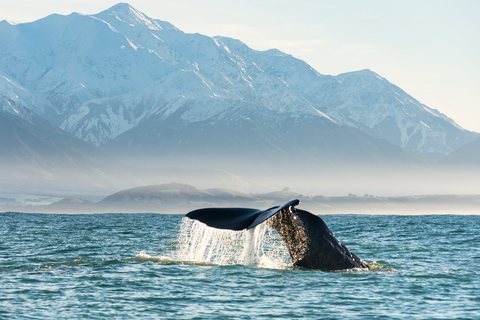
The tail fluke of a sperm whale raised above the sea, water streaming from it, snow-covered mountains close behind the shore

Photo: Kaikōura. Photograph: Whale Watch Kaikoura / Destination Kaikōura via Destination Kaikoura · CC BY 4.0

Interest

Places to watch wildlife

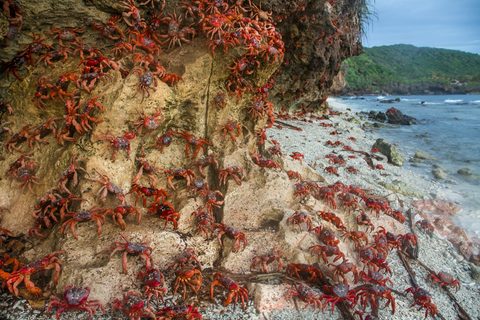
Follow the animals: red crabs marching to the sea on Christmas Island, elk back in the Smokies, polar bears waiting for the ice at Churchill and sperm whales off Kaikōura all year round.

17 places · last checked 5 November 2026

17places on this page
6whale coasts
133°of latitude, Svalbard to South Georgia

The places

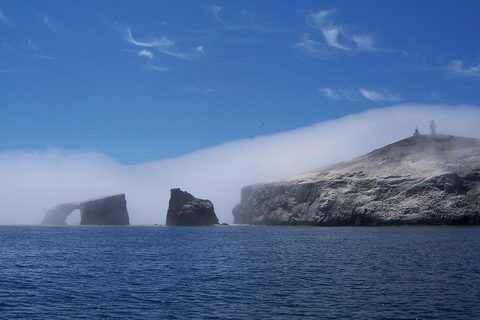
A rock arch and a sea stack off the end of a pale cliffed island topped by a lighthouse, with a bank of fog rolling over blue water under a blue sky

Anacapa Island

Twenty-seven whale and dolphin species in the channel, and gray whales passing from December to mid-March.

Season and sources Source: National Park Service (Channel Islands whale watching) · read

Wildlife calendar

Photograph: Shauna Bingham, CINMS, NOAA · Public domain (PD-USGov-NOAA) · cropped

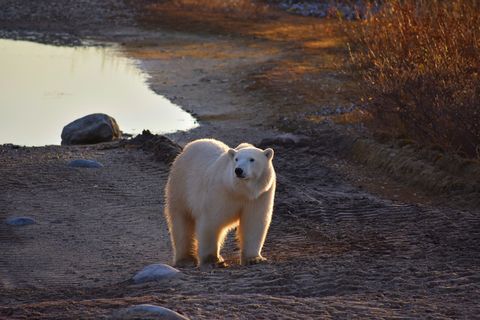
A pale polar bear walking toward the camera along a gravel track beside a still pool, low golden light on the tundra

Churchill

Many polar bears move to the Churchill coast from late September to mid-November to catch the first pack ice.

Season and sources Source: Parks Canada (Wapusk National Park: polar bears) · read

Wildlife calendar

Photograph: Emkmiller100 · CC BY-SA 4.0

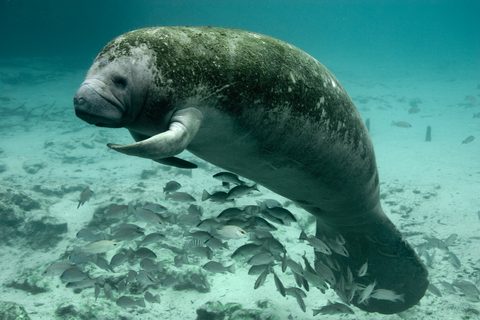
A manatee resting in clear water above a school of snapper over a sandy floor

Florida’s Springs

Seven manatee sanctuaries in Kings Bay, and a manatee season from 15 November to 31 March.

Season and sources Source: U.S. Fish and Wildlife Service (Crystal River NWR) · read

Wildlife calendar

Photograph: Keith Ramos / USFWS Endangered Species via Flickr · Endangered Florida manatee (Trichechus manatus), Crystal River National Wildlife Refuge, Florida · CC BY 2.0 · cropped

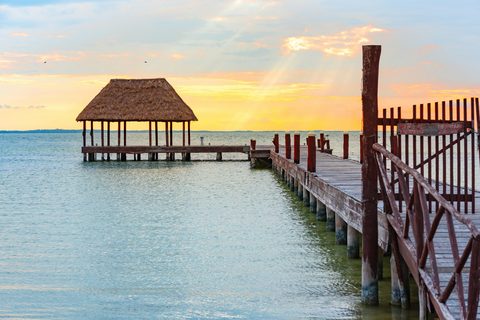
A pier running out over calm water under a sunset sky

Isla Holbox

One of the world's largest gatherings of whale sharks, off northern Quintana Roo, with a watching season from 15 May to 17 September.

Season and sources Source: Secretaría de Medio Ambiente y Recursos Naturales (Plan de Manejo Tipo: tiburón ballena) · read

Wildlife calendar

Photograph: Michiel Ton via Unsplash · Unsplash licence

A turquoise bay with a white beach curving right, green headlands layered behind and a pandanus in the foreground

Ogasawara Islands

Humpback whales come to breed from February to April, and sperm whales are seen from May to November.

Season and sources Source: Ogasawara Village Tourism Association (the sea) · read

Wildlife calendar

Photograph: Ootahara · CC0 · cropped

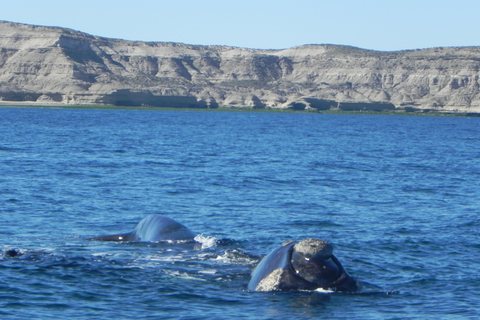
Two southern right whales at the surface, their callosity-marked heads breaking the swell, flat-topped sedimentary cliffs along the shore behind

Península Valdés

About 600 southern right whales come to Península Valdés to breed between June and November.

Season and sources Source: Administración de Parques Nacionales (Argentina): ballena franca austral · read

Wildlife calendar

Photograph: Fernanda Cabral Jeronimo · CC BY-SA 4.0 · cropped

A beach carpeted with king penguins and brown chicks, a hanging glacier falling behind in evening light

South Georgia

An estimated 4 million Antarctic fur seals, 95% of the world's breeding population.

Season and sources Source: Government of South Georgia and the South Sandwich Islands (Terrestrial environment: protected features) · read

Wildlife calendar

Photograph: Hannes Grobe · CC BY 4.0 · cropped

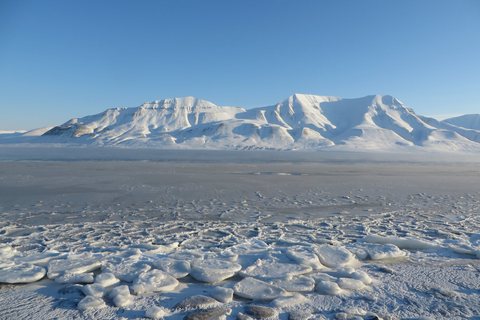
A flat-topped snow-covered mountain ridge across a fjord under deep blue sky, rounded plates of new sea ice covering the water in front

Svalbard

Polar bears, walrus and the Svalbard reindeer, a sub-species found nowhere else.

Season and sources Source: Norwegian Polar Institute (Cruise Handbook for Svalbard: wildlife) · read

Wildlife calendar

Photograph: Bernt Rostad · Adventfjorden, Svalbard · CC BY 2.0 · cropped

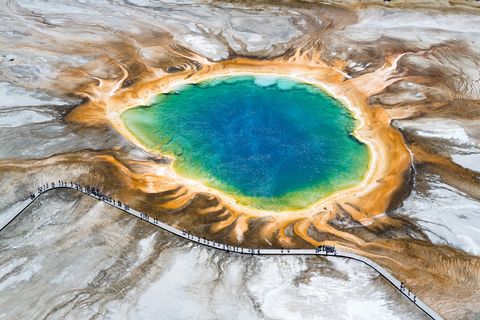
A blue and green hot spring ringed by orange and yellow microbial mats, with a boardwalk at the lower left and steaming ground around it

Yellowstone

Sixty-seven mammal species, and a bison rut in the Lamar and Hayden valleys in July and August.

Season and sources Source: National Park Service (Yellowstone wildlife) · read

Wildlife calendar

Photograph: NPS / Jacob W. Frank · Public domain

Month by month

Seasons, place by place

One row per place; a filled month is in that place's published season.
PlaceJanFebMarAprMayJunJulAugSepOctNovDec
Anacapa IslandIn seasonIn seasonIn seasonIn seasonIn seasonIn seasonIn season
Christmas Island (Indian Ocean)In seasonIn seasonIn seasonIn season
ChurchillIn seasonIn seasonIn seasonIn seasonIn seasonIn season
Florida’s SpringsIn seasonIn seasonIn seasonIn seasonIn season
Great Smoky MountainsIn seasonIn season
Isla HolboxIn seasonIn seasonIn seasonIn seasonIn season
KaikōuraIn seasonIn seasonIn seasonIn seasonIn seasonIn seasonIn seasonIn seasonIn seasonIn seasonIn seasonIn season
Ogasawara IslandsIn seasonIn seasonIn seasonIn seasonIn season
Península ValdésIn seasonIn seasonIn seasonIn seasonIn seasonIn seasonIn seasonIn seasonIn seasonIn seasonIn season
South GeorgiaIn seasonIn seasonIn seasonIn seasonIn seasonIn seasonIn seasonIn seasonIn seasonIn seasonIn seasonIn season
SvalbardIn seasonIn seasonIn seasonIn seasonIn seasonIn season
YellowstoneIn seasonIn seasonIn seasonIn seasonIn seasonIn seasonIn seasonIn seasonIn season

Some places have no published season, so they are not in this table. You will find them in the cards above.

Common questions

How close may visitors get to the animals?

Anywhere from two metres from Galápagos wildlife to 500 metres from a polar bear on Svalbard between March and June. Each place's card gives its own rule.

What are the rules for boats near whales?

Boats keep at least 50 m from whales off Kaikōura, approaching from the side and slightly to the rear, and at least 100 yards from whales in the Channel Islands, under the US Marine Mammal Protection Act.

Which place on this page has polar bears and belugas?

Churchill. Between 3,000 and 5,000 belugas are estimated to use the Churchill River estuary every day at their summer peak, and from late September to mid-November many polar bears move to the coast to catch the first pack ice.

When do the right whales come to Península Valdés?

Between June and November, when about 600 southern right whales arrive at Península Valdés to breed.

When does the Christmas Island red crab migration start?

With the first rain of the wet season: usually October or November, and sometimes as late as December or January. Then millions of red crabs leave the forest for the sea.

Which places on this page are about whales?

Six: gray whales off Anacapa Island, belugas at Churchill, sperm whales off Kaikōura and Dominica, southern right whales at Península Valdés, and humpbacks and sperm whales around the Ogasawara Islands. Isla Holbox's whale sharks are sharks, not whales.

Can this page say when the animals will turn up?

No. The months are the seasons each park or wildlife service publishes, not a forecast: the animals keep their own schedule, and each card links the page with the current word.

How this page is built

Method

A place joins this page when its park agency, wildlife service, government department or managing body publishes its animals, their numbers or their seasons. Each place carries at least three of these, each linked to its source. The calendars on the cards show the seasons as each park or wildlife service publishes them. Some figures are old and carry their year; some seasons are a permit or rule season rather than the animals', and the row says so. Visitor rules are the managing body's own.

Sources read (32)

What this page does not do

No rankings and no forecasts: the animals keep their own schedule. Park rules, closures and counts change, so each card links the page with the current word.