
Part of Canada
- Where
- West shore of Hudson Bay,
northern Manitoba, Canada - Coordinates
- 58.7684° N
94.1650° W - Population
- 870 (2021 census);
just over half Indigenous - Access
- Rail from Winnipeg, about two days;
or air. No road - Bears
- Western Hudson Bay estimate
618 in 2021; 1,185 in 1987 - Bear alert
- 204-675-2327
(204-675-BEAR) - Best visited
- October and November for bears;
July and August for belugas
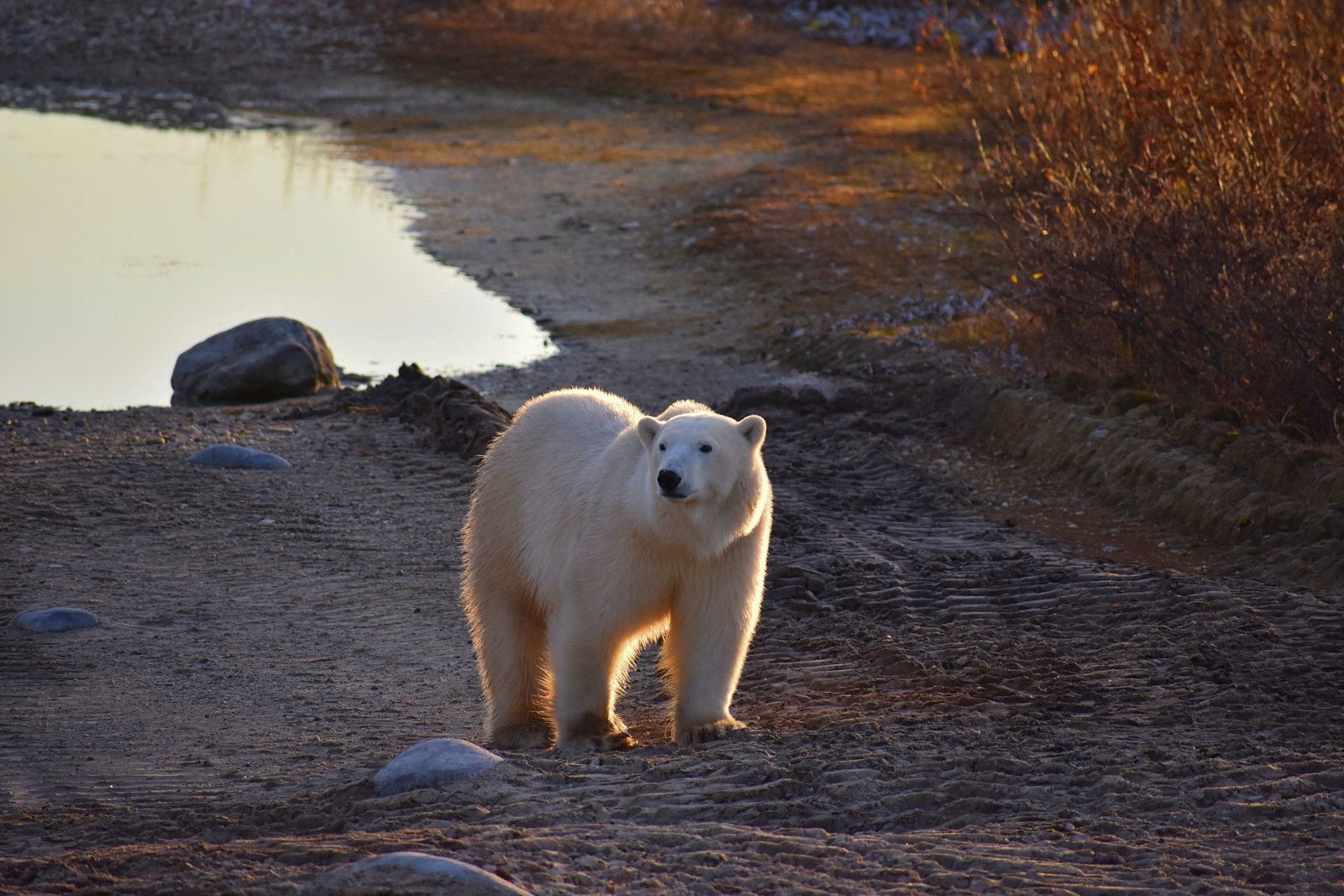
End of a very long railway: low buildings, a flat grey sea on one side, flat brown ground on the other, and no tree taller than I am. Signs on the shore rocks told me not to walk there, and I did not. From a bus on enormous wheels I watched a large pale shape lie down at the edge of the water and wait, as if for a ferry.
The short answer
Churchill is a port town on the west shore of Hudson Bay, at the mouth of the Churchill River in northern Manitoba. It had 870 residents at the 2021 census, just over half of them Indigenous, and no road connects it to the rest of Canada: it is reached by the Hudson Bay Railway or by air. Each summer, when the sea ice on Hudson Bay melts, the region’s polar bears come ashore; each autumn they gather along the coast near Churchill, where the ice forms early, to wait for freeze-up. For the town that means a Polar Bear Alert program run by the province, with a phone line, officers on patrol, and a holding facility for bears that come too close.
Why it's worth knowing
Churchill manages a large predator the way other towns manage snow.
Manitoba’s Polar Bear Alert program asks residents and visitors to call a single number, 204-675-2327, which spells 204-675-BEAR, whenever they see a bear in or near town. Officers from the province’s natural resources department respond, scare bears away, or capture them. Captured bears go to the Polar Bear Holding Facility. The province’s account is that the building is a former military warehouse built in the 1950s for the base at Fort Churchill, eight kilometres east of town, taken over by the province in 1979 after the base closed; the cells were built in 1980 and came into use in 1981. Five air-conditioned cells are used in summer, and a heated cell is kept for orphaned cubs.
Bears are held only until they can be moved. After a period of time they are either taken away by helicopter or, once Hudson Bay has frozen, released straight onto the ice, where they can hunt seals and where they stay until the ice melts the following July. Local usage and a good deal of press call the building the polar bear jail. The town’s arrangement with its bears is a public service, with a phone number, a patrol and a holding cell, run so that both bears and people survive the autumn.
The bears come here because of the shape of the coast. Polar Bears International’s explanation is that Hudson Bay is one of the few parts of the bears’ range where the ice melts completely every summer, forcing every bear ashore. The bay’s counterclockwise currents push melting ice against the southern coast, where the bears land, and when the ice forms again the same currents pile floes against the promontory Churchill stands on. The bears wait where the ice comes first.
The field notes
Fewer bears
The bears of Western Hudson Bay have been counted from the air using the same method in 2011, 2016 and 2021, in surveys led by Stephen Atkinson. As Polar Bears International reports the results, the population fell by 11 per cent between 2011 and 2016 and by 27 per cent between 2016 and 2021, to an estimated 618 bears, roughly half of the 1,185 estimated for 1987. The fall was driven by fewer adult females and young bears; the number of adult males changed little. The longer the ice-free season, the longer the bears must fast on land.
The end of the line
The Hudson Bay Railway is the only overland route to Churchill. In 2017, washouts from severe flooding closed the line north of Gillam, and for more than a year the town could be reached only by air. The Government of Canada then helped a new owner, the Arctic Gateway Group, take over the railway and the port; Wikipedia records that its partners include a consortium of First Nations and local communities. VIA Rail’s passenger train from Winnipeg takes about two days over 1,697 kilometres, by Travel Manitoba’s figures, and Calm Air flies from Winnipeg.
The town began as a fur-trade post. The Hudson’s Bay Company built a post near the river mouth in 1717, and later the stone Prince of Wales Fort across the river, now a National Historic Site run by Parks Canada.
The Sayisi Dene
Churchill’s history includes a forced relocation. In 1956, without consultation, explanation or adequate planning, the federal government moved the Sayisi Dene from Little Duck Lake to the Churchill area, first to the North Knife River and then to the town, where from 1959 they lived at Camp 10 in shacks without heat, water or sanitation. The Government of Canada’s own statement records hunger, children sent to residential schools or adopted out, and many deaths. On 16 August 2016, at Tadoule Lake, the Minister of Indigenous and Northern Affairs apologised on behalf of the Government of Canada, after the Sayisi Dene Relocation Claim was approved and signed that year.
Belugas and lights
The bears are the autumn. In July and August thousands of beluga whales move into the warmer water of the Churchill River estuary to feed and calve; the Town of Churchill puts the number entering the estuary at about 4,000. In late winter, usually February and March, the aurora borealis can be seen on clear dark nights.
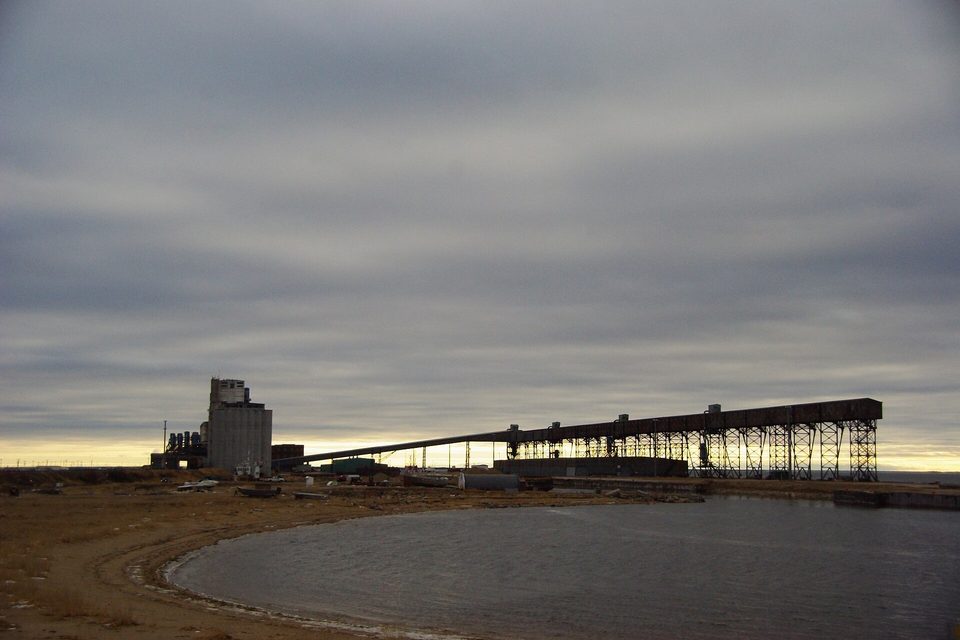
The grain elevator and dock of the Port of Churchill, from Cape Merry, November 2011.
Photograph: Martin Lopatka · The Sea Port and Hudsons Bay · CC BY-SA 2.0 · cropped
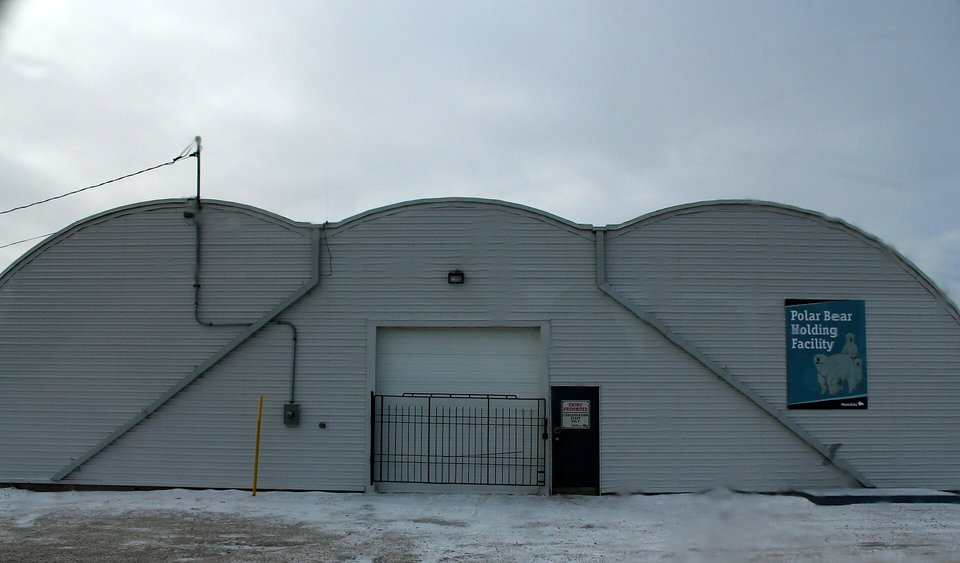
The Polar Bear Holding Facility in a former military building at Churchill, November 2011.
Photograph: Emma · Polar Bear Jail (6360633055) · CC BY 2.0 · cropped
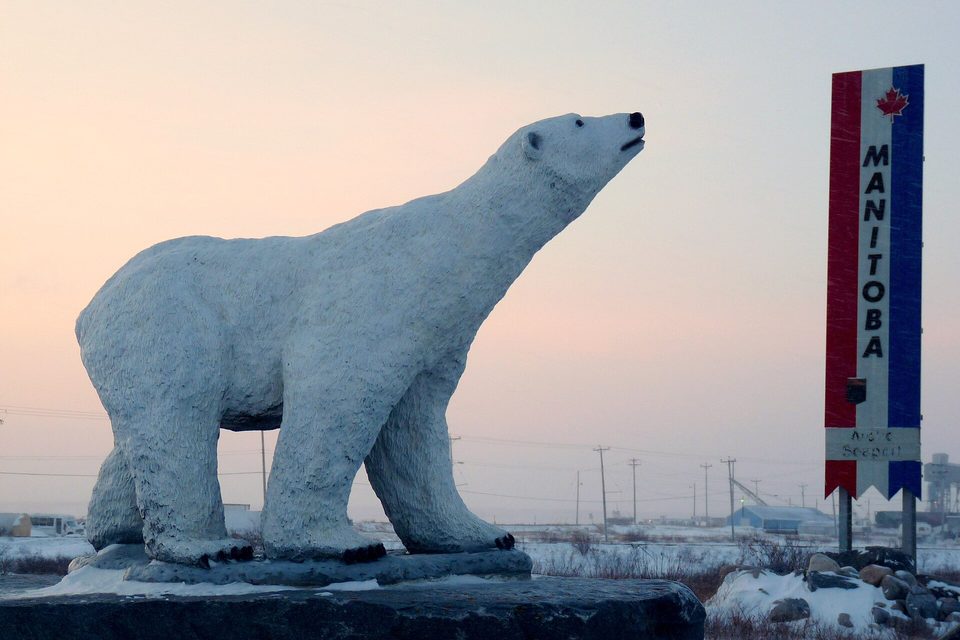
The polar bear statue in Churchill, November 2012.
Photograph: Ian Stewart · Churchill polar bear statue · CC BY-SA 3.0 · cropped
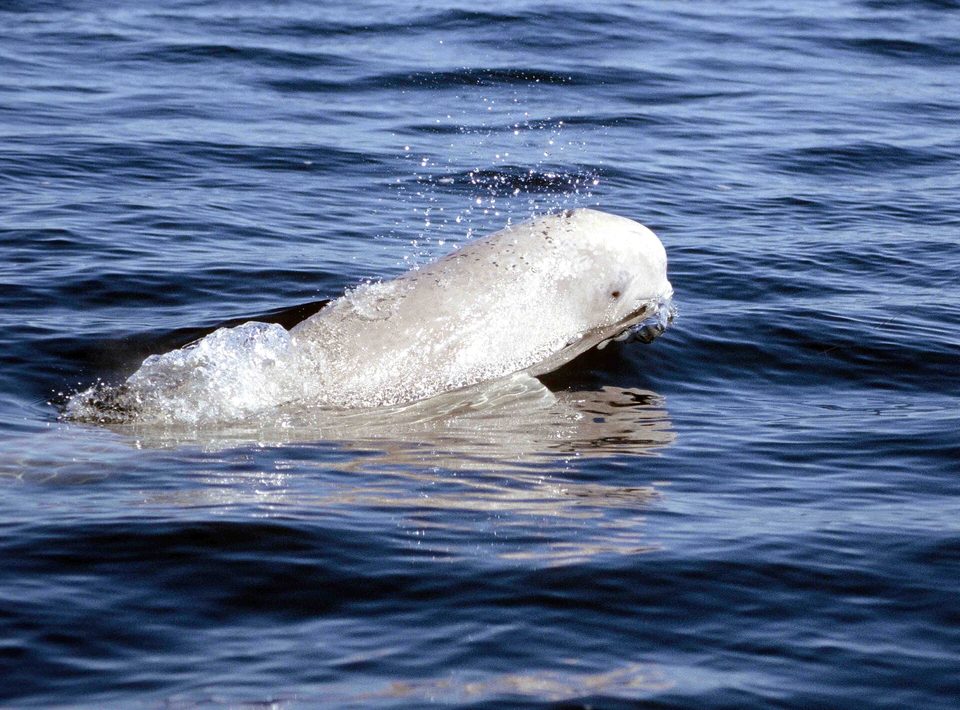
A beluga surfacing in the Churchill River near Hudson Bay, July 1999.
Photograph: Ansgar Walk · Beluga 1 1999-07-03 · CC BY-SA 2.5
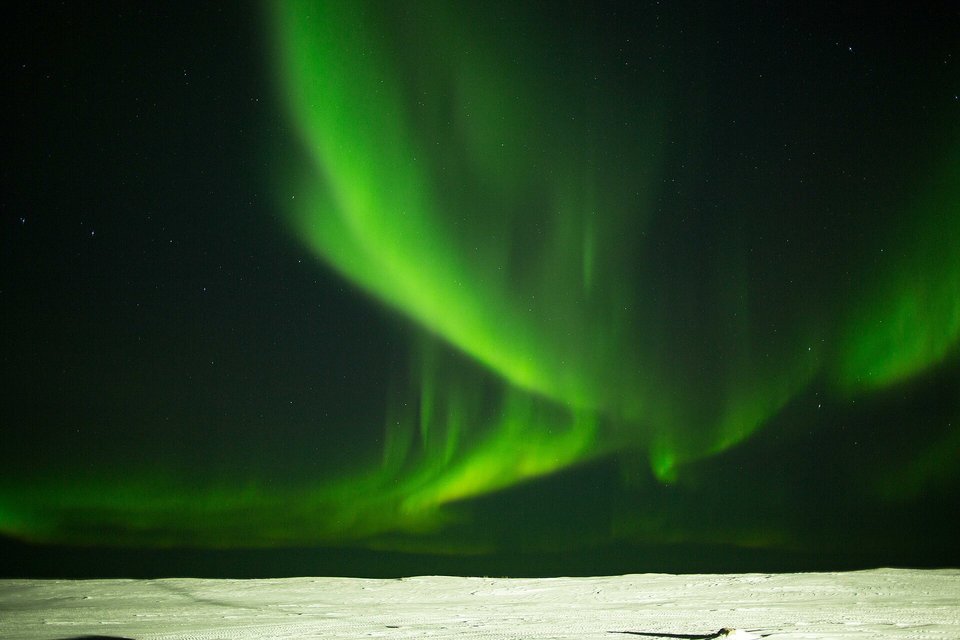
Aurora over the snow near Churchill, 2015.
Photograph: Marco Brotto · CC BY-SA 4.0
- Go when the water is about to freeze and the whole town is holding its breath.
- Obey every sign that says keep off the rocks. The rocks are occupied.
- Come back in summer for the white whales, and bring a warmer coat than you think.
- Remember that this is people’s home first and a place to watch bears second. Say good morning.
- See a bear. (Saw one. Then the list asked for a mother with cubs, then a bear on the ice, then a bear doing something I could describe properly. Item open.)
The Polar Bear Holding Facility. A plain building that was once a military warehouse for the base at Fort Churchill, east of town, in provincial hands since 1979, with cells built in 1980 for bears that would not stay out of town. Its bears are not on show. They wait, as the bears on the shore are waiting, for Hudson Bay to freeze, and then they are carried out onto the ice or flown away by helicopter and let go. Before it existed, Wikipedia records, bears that would not leave town were shot.
Tally, in the marginA building full of bears waiting for the sea to freeze, kept in for their own good and everybody else’s. I drove past it on the way to see the bears and took it for a garage.
Getting there
How to get there. There is no road. VIA Rail runs a train from Winnipeg to Churchill, about two days each way, with sleeper cars, and Calm Air flies from Winnipeg. Bear-season trips usually combine the journey, a room in town and days out in licensed tundra vehicles; for October and November, book well ahead.
When to go. Bear season is October and November, which is also the busiest time in town and the time of highest risk of meeting a bear. July and August bring the belugas, and summer bears can sometimes be seen from boats. Late winter is for the northern lights.
Staying safe. Follow the Polar Bear Alert rules. Do not walk on the shore rocks or outside town, especially at night, and never alone; the signs mean it. If you see a bear in or near town, call 204-675-2327. Bear viewing outside town is done from licensed vehicles and with guides.
Being a guest. Churchill is a town people live and work in, with a large Cree, Dene, Métis and Inuit population. Ask before photographing people, and respect private property.
Mark this place
Common questions
Why do polar bears come to Churchill?
Hudson Bay’s sea ice melts completely each summer, forcing its polar bears ashore, and in autumn the bay’s currents pile new ice against the promontory Churchill stands on, so the ice forms there early. Polar bears gather along the coast near Churchill, Manitoba, in October and November to wait for freeze-up, then go out onto the ice to hunt seals, according to Polar Bears International.
What is the polar bear jail in Churchill?
It is Manitoba’s Polar Bear Holding Facility in Churchill, a former military warehouse built in the 1950s for the base at Fort Churchill. The province took it over in 1979 and built cells that came into use in 1981. Bears captured in or near town are held there and then moved by helicopter or released onto Hudson Bay once it has frozen. Locals and the press call it the polar bear jail.
How many polar bears are there around Churchill?
Aerial surveys led by Stephen Atkinson estimated the Western Hudson Bay polar bear population, which gathers near Churchill, at 618 bears in 2021, down 27 per cent from 2016 and roughly half the 1,185 estimated in 1987, as Polar Bears International reports them. The decline was driven by fewer adult females and young bears.
How do you get to Churchill, Manitoba?
Churchill has no road connection. VIA Rail runs trains from Winnipeg to Churchill, a journey of about two days over 1,697 kilometres, and Calm Air flies from Winnipeg. The Hudson Bay Railway was cut by flood washouts in 2017, leaving Churchill reachable only by air until the Arctic Gateway Group took over and restored the line.
When is the best time to see polar bears in Churchill?
October and November, when polar bears gather on the Hudson Bay coast near Churchill, Manitoba, waiting for the sea to freeze. It is also the busiest season in town and the time of highest risk of encounters. Viewing is done from licensed tundra vehicles with guides, and packages for those weeks book up months ahead.
What number do you call if you see a polar bear in Churchill?
Manitoba’s Polar Bear Alert line in Churchill is 204-675-2327, which spells 204-675-BEAR. Residents and visitors call it whenever they see a polar bear in or near the town, and provincial officers respond to scare the bear off or capture it for the Polar Bear Holding Facility.
What happened to the Sayisi Dene at Churchill?
In 1956 the Government of Canada moved the Sayisi Dene from Little Duck Lake to the Churchill area without consultation or adequate planning. From 1959 they lived at Camp 10 in Churchill without heat, water or sanitation, and many died. The Government of Canada apologised on 16 August 2016 at Tadoule Lake, after the Sayisi Dene Relocation Claim was settled.
When can you see beluga whales in Churchill?
In July and August, when thousands of beluga whales move into the warmer water of the Churchill River estuary at Churchill, Manitoba, to feed and calve. The Town of Churchill puts the number entering the estuary at about 4,000. Boat and kayak tours run in those months.