
Part of The US National Parks
- Where
- Yosemite Valley, Sierra Nevada
eastern California - Coordinates
- 37.7217° N
119.6464° W - Protected
- Yosemite Grant 1864
national park 1890 - The old Firefall
- Glacier Point, summer nights
last one 25 January 1968 - The new one
- Horsetail Fall, mid- to late February
(National Park Service) - Entry in 2026
- No vehicle reservation
(National Park Service) - Visits
- About 4.3 million (2025)
(per Wikipedia)
At dusk the road belonged to people, all of us facing a wall of pale granite too tall to take in. A thread of water came off its shoulder. The light went low and the thread caught fire, orange as a coal, and the whole road said oh. Higher up, little lights came on where people slept on the wall. My tent has never seemed so sensible.
The short answer
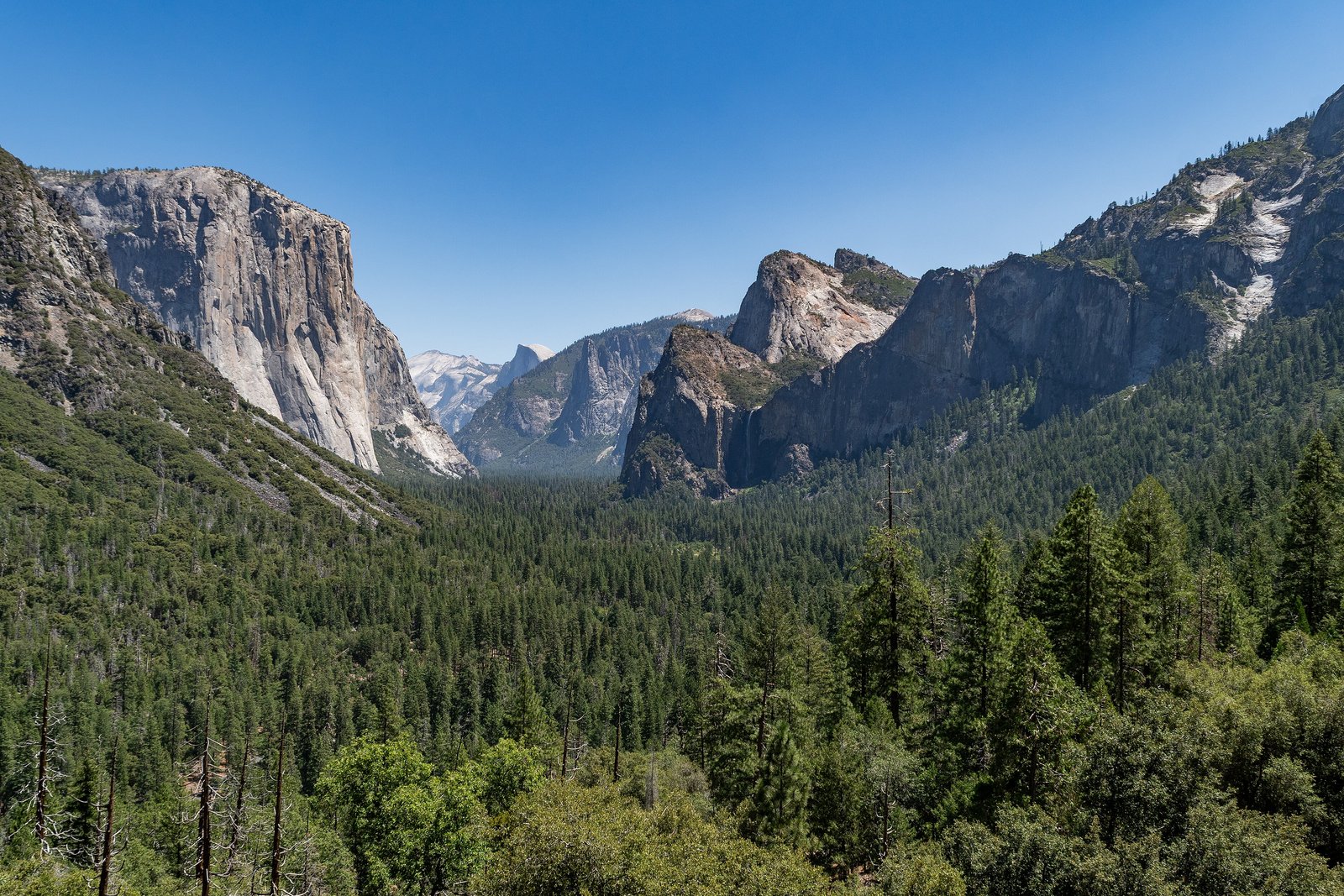
Yosemite National Park covers about 3,070 km² of the Sierra Nevada in eastern California, and most of its visitors spend their time in Yosemite Valley, a glacier-carved trough of granite about 12 km long, with cliffs rising 900 to 1,100 metres from its floor and waterfalls dropping from the hanging valleys at its rim. The valley was the home of the Ahwahneechee, a Miwok people. Abraham Lincoln signed the Yosemite Grant, which set it aside as protected public land, in 1864; the national park was created in 1890, and UNESCO listed it in 1984. Wikipedia gives the park’s visits in 2025 as about 4.3 million.
Why it's worth knowing
For most of a century, the waterfall everyone came to see in Yosemite Valley was made of fire. On summer nights, workers at Glacier Point, a clifftop about 975 metres (3,200 ft) above Curry Village, pushed a bed of glowing embers over the edge, and the crowds on the valley floor watched them pour down the rock. In January 1968 the National Park Service stopped it for good; by Wikipedia’s account, the director who gave the order judged a man-made spectacle inconsistent with the Service’s mission of encouraging appreciation of natural wonders.
Nature had its own version. Horsetail Fall is a small seasonal waterfall that runs over the eastern edge of El Capitan. For about two weeks in February, on evenings when the sky is clear, the water is flowing and the sun is at the right angle, the Park Service explains, the setting sun lights it a deep orange. The old name has moved across to it: the Park Service’s own 2026 notice calls the viewing period Firefall.
The crowds came back with the name. Every February the Park Service now runs a traffic and parking plan for the Horsetail Fall evenings: visitors park in the east of the valley and walk to marked viewing areas along a lane of Northside Drive closed to cars. The park stopped a spectacle partly because of the crowds and traffic it drew, and the valley produced a natural one that draws them again.
The field notes
How the fire fell
The Firefall began by accident, by the account Wikipedia gives from a 1961 interview with one of the family. James McCauley, who built a small hotel at Glacier Point in the 1870s, used to kick his guests’ campfire over the edge at the end of the evening; people in the valley paid his sons to have it done again, and the sons began hauling up extra wood. The Washburn brothers stopped it when they took over the hotel in 1897. David Curry, who founded Camp Curry in the valley in 1899, revived it in the early 1900s, and it became the nightly close of the Camp Curry programme, called up the cliff by a shouted exchange that ended “Let the fire fall.”
The fuel settled on red fir bark, which burned down to an even bed of coals. Mary Curry Tresidder’s Trees of Yosemite describes it as the wood burned down to glowing coals each night for the Firefall, and Wikipedia’s account adds that the crews could collect it only from trees that were already dead and down, and by the end were driving as far as the Tioga Road to find enough.
Why it stopped
The Firefall was suspended in the Second World War and brought back by public demand. In January 1968 the Park Service director, George B. Hartzog Jr., ordered it ended; Wikipedia’s account gives his grounds as a man-made event being inconsistent with the Service’s mission of encouraging appreciation of natural wonders, and adds the nightly stream of cars leaving the campgrounds and meadows for the best views. The last one fell on 25 January 1968, in winter, with no crowd to see it.
The Glacier Point Hotel, damaged by heavy snow that winter, burned in 1969 and was not rebuilt. The Park Service’s account of the fire notes that the pile of red fir bark left over from the Firefall, stacked beside the hotel, added fuel to it.
The valley before the park
Yosemite Valley was the home of a Miwok people who called it Ahwahnee and themselves the Ahwahneechee. Wikipedia’s account records that they burned the valley floor each year, which kept the meadows open and favoured the black oaks whose acorns were their main food. The first well-documented entry of European Americans into the valley was an armed one: in 1851 the Mariposa Battalion, a militia raised under California’s governor, attacked the Ahwahneechee there.
Behind the Yosemite Museum, the Park Service keeps the Indian Village of the Ahwahnee: a short trail through a reconstructed Miwok-Paiute village, with outdoor displays on the lives of the valley’s first inhabitants, open all year.
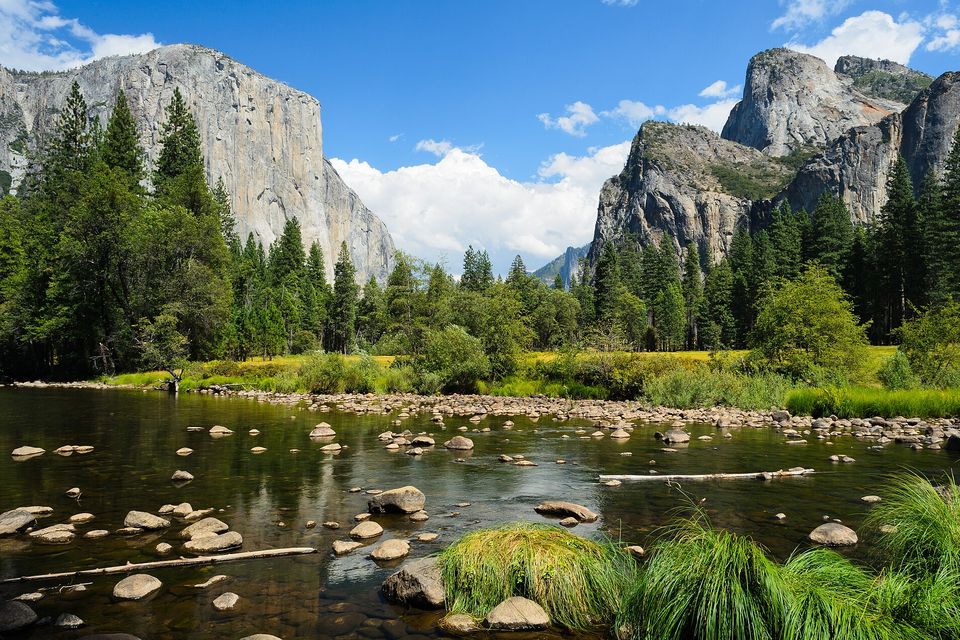
El Capitan over the Merced River at Valley View, August 2013.
Photograph: King of Hearts · Valley View Yosemite August 2013 002 · CC BY-SA 3.0 · cropped
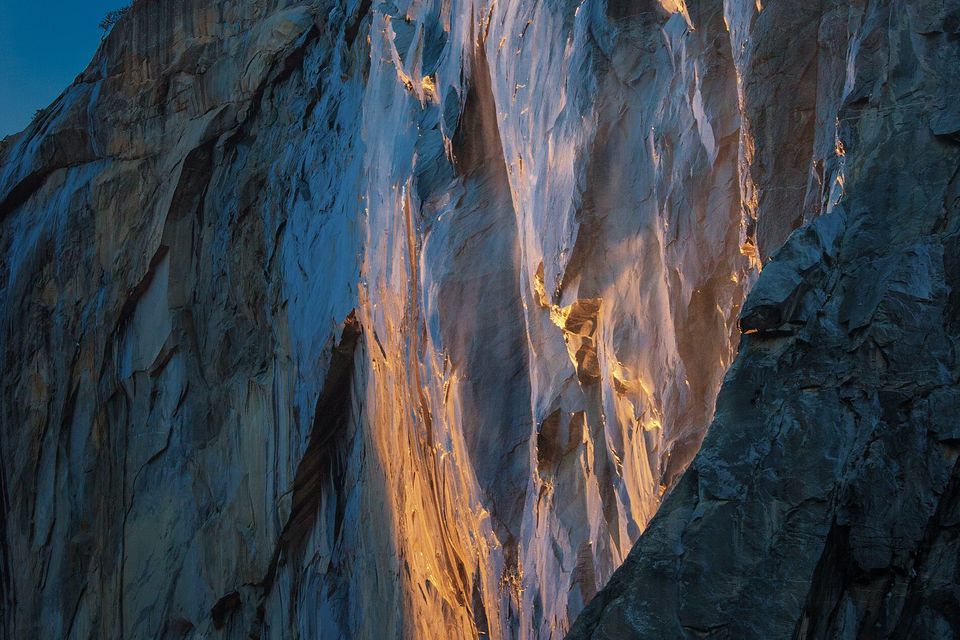
Horsetail Fall lit orange by the setting sun on El Capitan's east edge, February 2017.
Photograph: Barney Moss · "Firefall" - Horsetail Fall (Yosemite) · CC BY 2.0 · cropped
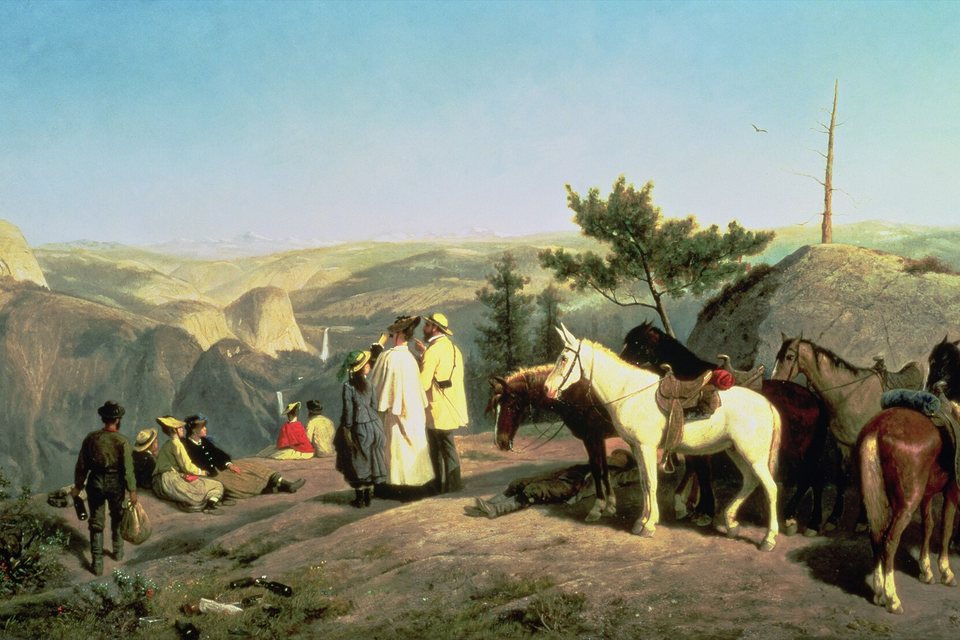
Visitors and their horses at the rim of Glacier Point in Carl Wilhelm Hahn's 1874 oil painting, the decade the first hotel went up on the clifftop (a painting, not a photograph).
Illustration: Carl Wilhelm Hahn, Yosemite Valley from Glacier Point, 1874 (oil on canvas, California Historical Society) · Public domain · cropped
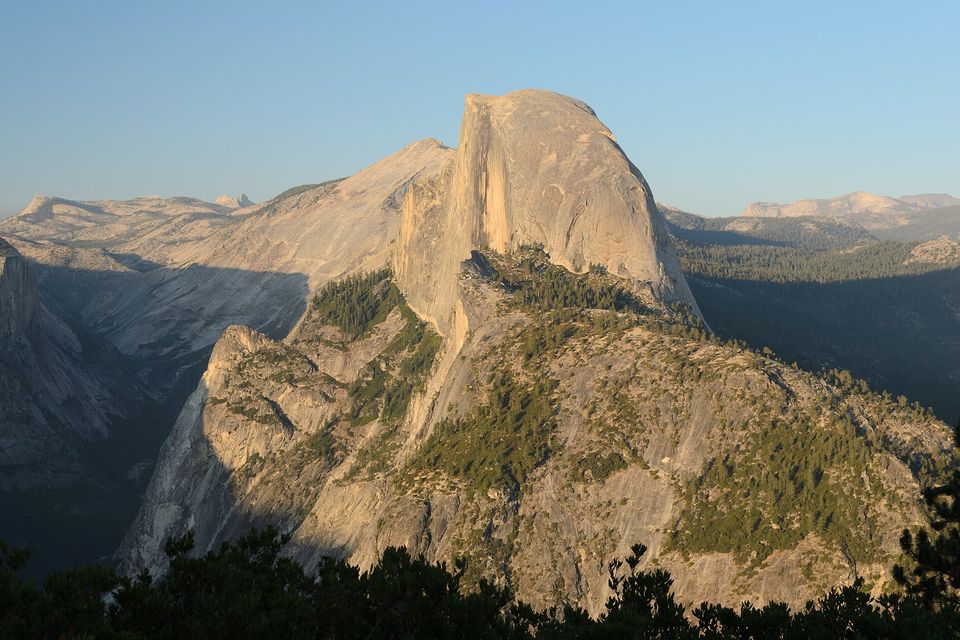
Half Dome in evening light from Glacier Point, the clifftop where the Firefall began, August 2013.
Photograph: King of Hearts · Glacier Point Yosemite August 2013 002 · CC BY-SA 3.0 · cropped
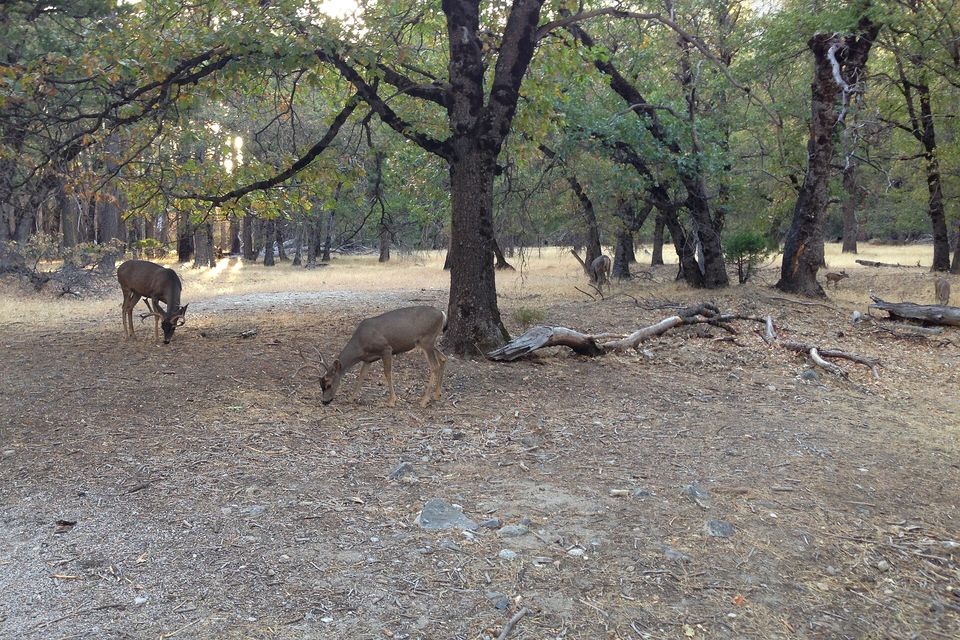
Mule deer grazing under oaks on the valley floor in the evening, September 2013.
Photograph: Famartin · 2013-09-19 18 22 47 Mule Deer in Yosemite Valley · CC BY-SA 3.0 · cropped
- Come in the second half of winter for the orange water, dress for standing still in the cold, and give it every evening you have. Some nights the sky says no.
- Put every crumb of food in the steel lockers, for the bears’ sake as much as yours. (Put the list in too, by mistake. It came out smelling faintly of cheese and none the worse.)
- Start at the village behind the museum, and let the valley be introduced to you properly by its oldest family.
- Go up to the clifftop where the fire used to fall, and look down at the meadow where everybody used to stand.
- Lie in the meadow after dark and find the little lights on the big wall. Then let them sleep.
A strip of red fir bark. By about 1920 it had become the Firefall’s fuel, because it burned down to the most even bed of coals: each day a stack was laid on the valley side of Glacier Point, lit to burn down for a couple of hours, and at nine in the evening pushed over the edge with long-handled pushers. The crews were allowed to take it only from trees that were already dead and fallen. When the Firefall ended, a pile of the bark was left beside the Glacier Point Hotel, and it fed the fire that destroyed the hotel the following year.
Tally, in the marginI had come down firmly on the side of the sun. Then I held a strip of the bark, chosen with great patience for how evenly it burned, and now I am on everybody’s side, which is no help at all.
Getting there
How to get there. Yosemite Valley is reached by road from the west and south. Without a car, the regional bus system YARTS runs into the valley from Merced, where it connects with Amtrak trains and the airport, and along Highway 41 from Fresno by way of Oakhurst and Wawona; the Park Service notes that the park entrance fee is included in the bus fare.
When to go. The valley is open all year. Glacier Point Road, the drive to the top of the old Firefall, is usually open from about June to October and closed by snow in winter, by Wikipedia’s account. Horsetail Fall glows only on clear evenings in mid- to late February, and only when the fall is running; the Park Service projected 10 to 26 February for 2026 and warns that natural conditions decide.
What to book ahead. The Park Service did not require vehicle reservations to enter Yosemite in 2026, including during the Horsetail Fall period, and relies instead on traffic monitoring and parking management; check its site for the year you travel. Since 1 January 2026, visitors who are not US residents and are 16 or older pay a $100 fee on top of the entrance fee at eleven of the busiest national parks, Yosemite among them; the $250 non-resident annual pass covers that fee for the holder and three others.
Safety. The State Department’s travel advisories cover other countries, so none applies here; the hazards are the park’s own. The Park Service says proper food storage is required by federal law, because of the bears, and Wikipedia’s account notes that the Four Mile Trail up to Glacier Point is usually closed from December to May, when snow and ice make it dangerous.
Mark this place
Common questions
What was the Yosemite Firefall?
The Yosemite Firefall was a nightly summer show in which workers pushed the glowing embers of a red fir bark fire off Glacier Point, about 975 metres (3,200 ft) above Curry Village, so that they poured down the cliff like a waterfall of fire. It began informally at James McCauley’s hotel in the 1870s, was revived by Camp Curry in the early 1900s, and ended in January 1968.
Why did the Yosemite Firefall stop?
The National Park Service ended the Firefall in January 1968. By Wikipedia’s account the Park Service director, George B. Hartzog Jr., judged a man-made event inconsistent with the Service’s mission of encouraging appreciation of natural wonders, and the nightly traffic it caused was a further problem. The last Firefall fell on 25 January 1968.
When can you see the Horsetail Fall firefall in Yosemite?
Horsetail Fall, on the eastern edge of El Capitan, glows orange at sunset only on clear evenings in mid- to late February, when the waterfall is flowing and the sun is at the right angle. The National Park Service projected 10 to 26 February for 2026 and says the dates depend on natural conditions.
Do you need a reservation to enter Yosemite in 2026?
No. The National Park Service did not require vehicle reservations to enter Yosemite National Park in 2026, including during the February Horsetail Fall period, and manages crowds with traffic monitoring and parking management instead. The entrance fee still applies, and since January 2026 visitors who are not US residents, aged 16 and over, pay an extra $100.
Where do you watch Horsetail Fall from?
During the February viewing period the National Park Service asks visitors to park in the eastern part of Yosemite Valley and walk to designated viewing areas along a lane of Northside Drive that is closed to vehicles. Limited parking for vehicles with a disability placard is kept at the El Capitan Picnic Area.
Who lived in Yosemite Valley before it became a park?
Yosemite Valley was the home of the Ahwahneechee, a Miwok people who called the valley Ahwahnee and burned its floor each year to keep the meadows open and the black oaks productive. The Mariposa Battalion attacked them in the valley in 1851. The Park Service’s Indian Village of the Ahwahnee, behind the Yosemite Museum, is a reconstructed Miwok-Paiute village.
When was Yosemite first protected?
Abraham Lincoln signed the Yosemite Grant in 1864, setting Yosemite Valley aside as protected public land. Yosemite National Park was created in 1890, and UNESCO inscribed it as a World Heritage Site in 1984.
How do you get to Yosemite without a car?
The Yosemite Area Regional Transportation System (YARTS) runs buses into Yosemite Valley from Merced, where it meets Amtrak trains and the airport, and along Highway 41 from Fresno by way of Oakhurst and Wawona. The National Park Service says the park entrance fee is included in the YARTS fare.