
- Where
- Salisbury Plain, Wiltshire
about 3 km west of Amesbury - Coordinates
- 51.1789° N
1.8262° W - Built
- Earthwork c. 3000 BC
stones c. 2500 BC (English Heritage) - The Altar Stone
- About 6 tonnes
from north-east Scotland (Clarke et al. 2024) - The other stones
- Sarsens from West Woods, 25 km
bluestones from Preseli, 250 km+ - World Heritage
- 1986, with Avebury
- Advisory
- United Kingdom Level 2
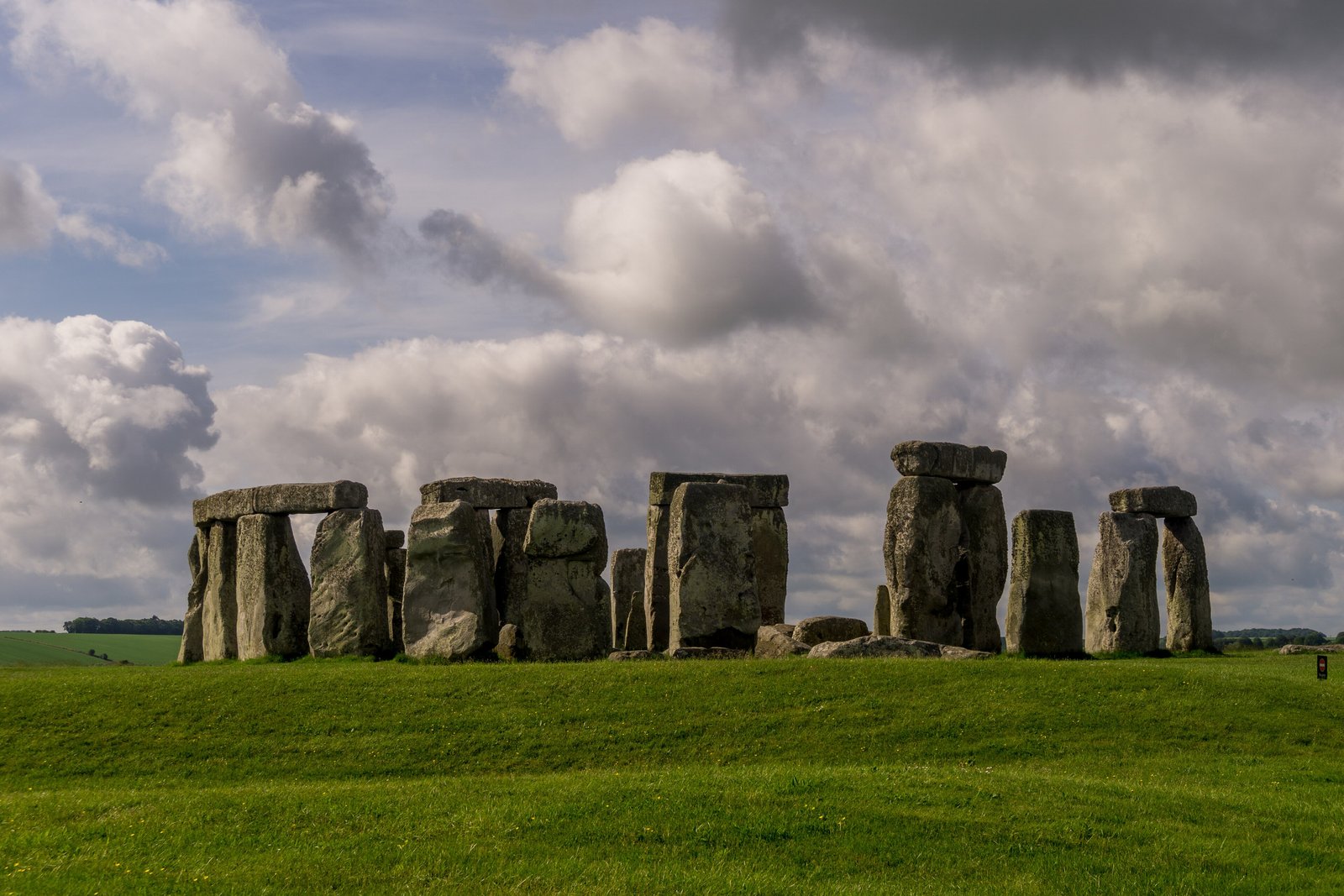
Rolling green downs, sheep, a wind with nothing to stop it, and a ring of great grey slabs, some with another laid across two like a doorway into the same field. Jackdaws sat along the tops like ushers. We walked round behind a rope while lorries hummed past on the road, and the slabs took no notice of any of us.
The short answer
Stonehenge stands on Salisbury Plain in Wiltshire, in southern England, about 3 km west of Amesbury. English Heritage, which manages it, dates the first monument, a circular ditch and bank, to about 3000 BC, and the central stone settings to about 2500 BC: sarsen stones raised as an outer circle and an inner horseshoe, with the smaller bluestones set between them. By English Heritage’s account the sarsens came from West Woods, about 25 km to the north, and the bluestones from the Preseli Hills of Wales, more than 250 km away. Stonehenge has been part of a World Heritage Site with Avebury since 1986.
Why it's worth knowing
At the centre of the monument, partly buried under two fallen stones of the largest trilithon, lies the Altar Stone: a slab of greenish Old Red Sandstone that English Heritage gives as about six tonnes and Wikipedia as about 4.9 metres long. It is the odd one out. It is not a sarsen and not like the Welsh bluestones, and for a long time it was assumed to have come from the Old Red Sandstone of south Wales.
In August 2024 a team led by Anthony Clarke of Curtin University, with colleagues from Aberystwyth University and elsewhere, published a different answer in Nature. They dated the tiny zircon, apatite and rutile grains inside fragments of the stone and compared their ages with sandstones across Britain and Ireland. The closest match was the Old Red Sandstone of the Orcadian Basin in north-east Scotland, which, the paper says, puts the stone’s source at least 750 km from where it lies. The authors argue that a block that size was more probably moved by sea than overland, and read the journey as evidence of a high level of organisation in Neolithic Britain.
The search has since narrowed and not ended. A further study from Aberystwyth University ruled out the Orkney islands themselves, and English Heritage says the hunt for the stone’s source continues on the Scottish mainland.
The field notes
A cemetery as well as a monument
English Heritage records about 64 cremation burials found at Stonehenge, and estimates that as many as 150 people may originally have been buried there, which would make it the largest late Neolithic cemetery in the British Isles. Many of the cremations were placed in and around the Aubrey Holes, a ring of pits just inside the bank.
The rope, and the solstice
Visitors could once walk among the stones and climb them; by Wikipedia’s account they were roped off in 1977 because of erosion, and the path now runs round the circle at a short distance. English Heritage opens the stones for managed open access at the summer solstice, as it has done since 2000, and at the winter solstice. It says that for many of the people who attend Stonehenge is a sacred place, and it works with the Druid and pagan groups for whom the solstices are part of their religious calendar.
Inside the circle
On other days the only way inside the circle is English Heritage’s Stone Circle Experience: hour-long guided visits early in the morning or in the evening, outside normal opening hours, priced by English Heritage from £70 for an adult. The Altar Stone lies in the middle, beneath the fallen stones of the great trilithon, and is easy to miss from the path.
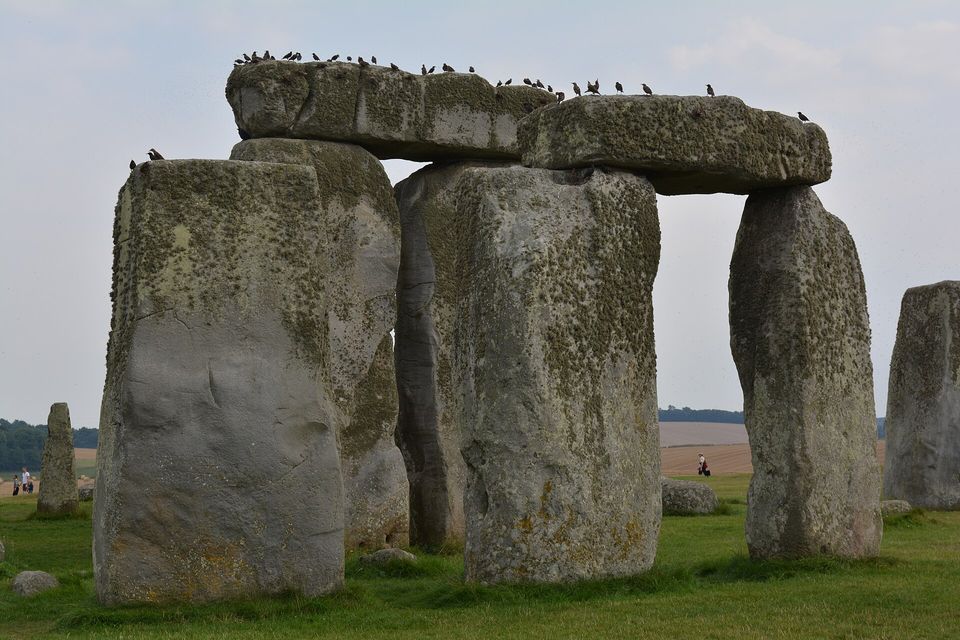
Birds lined along the lintels of the sarsen trilithons, August 2016.
Photograph: TobyEditor · CC BY 4.0
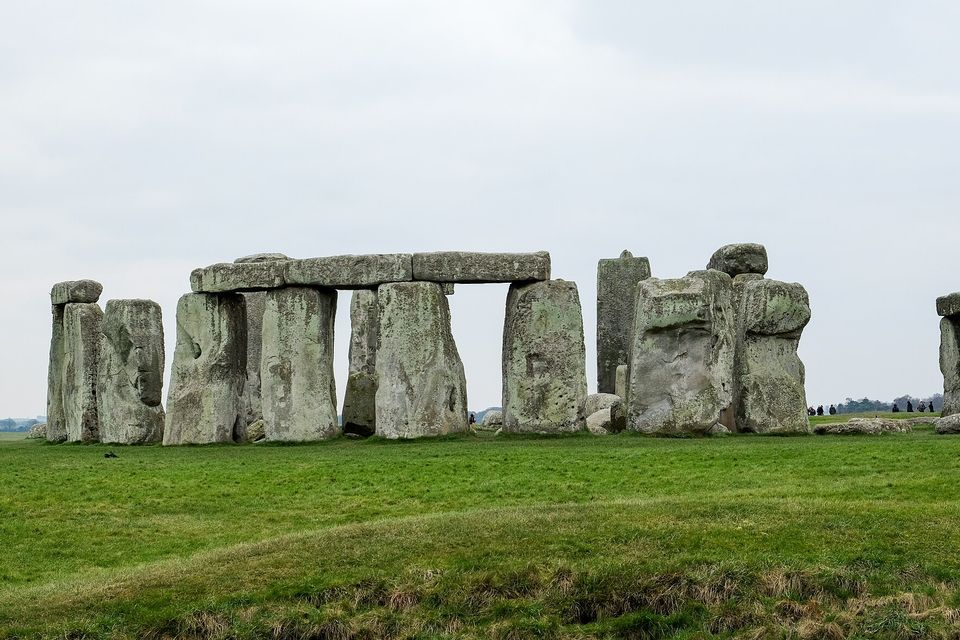
The sarsen circle from the north-east in February 2016.
Photograph: DeFacto · CC BY-SA 4.0 · cropped
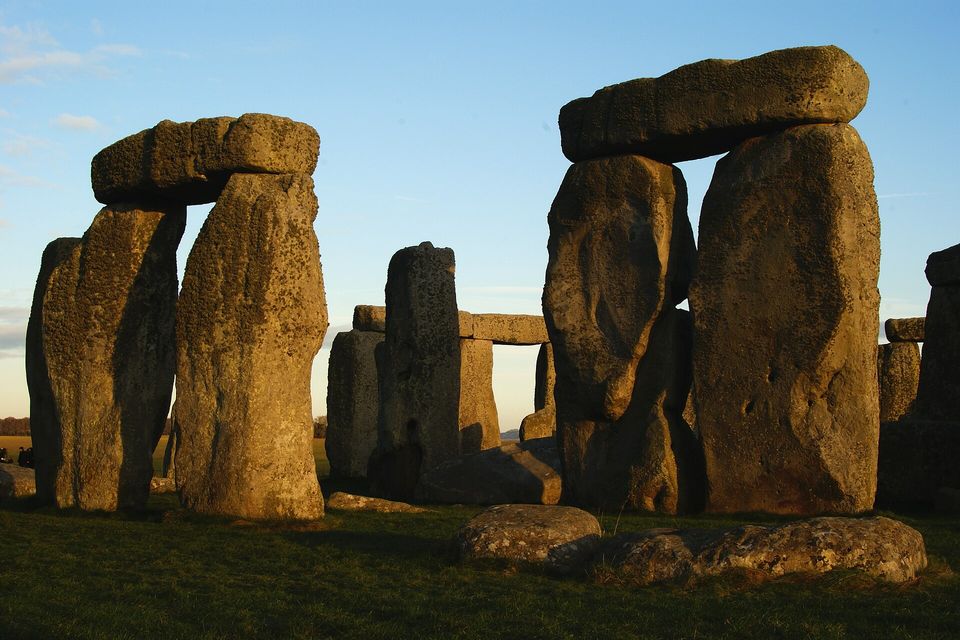
Two sarsen trilithons in low winter light, December 2009.
Photograph: Peter Trimming · Sarsen Stones at Stonehenge · CC BY-SA 2.0 · cropped
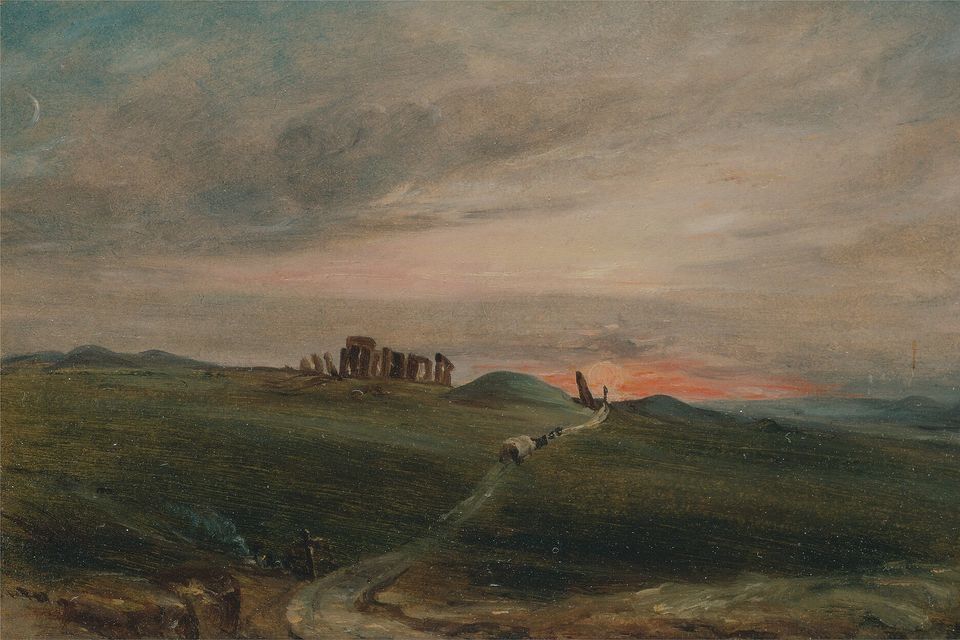
John Constable's oil sketch of the stones on the open downs, 1836 (a painting, not a photograph).
Illustration: John Constable, Stonehenge at Sunset, 1836 (oil sketch, Yale Center for British Art) · Public domain · cropped
- Walk at least part of the way out from the visitor centre, so the ring comes up over the grass slowly.
- Look for the one slab in the middle that is lying down under the others. Everyone else is looking at the standing ones.
- At the solstice, stand back for the people who have come to pray, and keep your own celebrating a step behind theirs.
- Go round the path at a slow walk. Some of this ground was a burial place, and it can have your quiet.
- Before you leave, look back from the far edge of the grass, when it has gone small again against the sky.
Tried to go the whole way round without writing anything down. Managed about half, and then a jackdaw landed on a lintel and had to be recorded.
The Altar Stone. A slab of greenish sandstone at the centre of the monument, about five metres long and about six tonnes, lying flat and partly buried under two fallen stones of the largest trilithon. For a long time it was taken to be Welsh. In 2024 the ages of the mineral grains inside its fragments matched the far north-east of Scotland, at least 750 km away, and Orkney has since been ruled out. Somewhere on the Scottish mainland is the place it was taken from, and nobody has found it yet.
Tally, in the marginNext time I shall find the flat one first. It had come a longer way than any of us, and there it was, lying under two others without a word of complaint.
Getting there
How to get there. Stonehenge’s visitor centre has the car park, exhibition and tickets; a shuttle runs from it to the stones every few minutes, a ten-minute ride with no need to book. Without a car, the Stonehenge Tour bus leaves hourly from the forecourt of Salisbury railway station, about 19 km away, with an optional stop at Old Sarum, by English Heritage’s account.
When to go and what to book. English Heritage strongly recommends booking a timed ticket in advance, online up to three hours before a visit, and offers a discount for doing so. The Stone Circle Experience is booked separately. The summer and winter solstices bring managed open access, free of charge, and large crowds.
Safety. The State Department has the United Kingdom at Level 2, exercise increased caution, for terrorism. Its only area note concerns isolated violence by dissident groups in Northern Ireland, far from Wiltshire.
Mark this place
Common questions
Where did the Stonehenge Altar Stone come from?
A study published in Nature in August 2024 by Anthony Clarke of Curtin University and colleagues matched the ages of mineral grains in Stonehenge’s Altar Stone to the Old Red Sandstone of the Orcadian Basin in north-east Scotland, at least 750 km away. A later Aberystwyth University study ruled out Orkney, and English Heritage says the search continues on the Scottish mainland.
How big is the Altar Stone at Stonehenge?
English Heritage gives the Altar Stone as about six tonnes, and Wikipedia gives its length as about 4.9 metres. It is a slab of greenish sandstone lying at the centre of Stonehenge, partly buried under two fallen stones of the largest trilithon.
Where did the stones of Stonehenge come from?
English Heritage says the large sarsen stones of Stonehenge came from West Woods, about 25 km to the north, and the bluestones from the Preseli Hills of Wales, more than 250 km away. The Altar Stone, the slab at the centre, was traced in 2024 to north-east Scotland, at least 750 km away.
How old is Stonehenge?
English Heritage dates the first monument at Stonehenge, a circular ditch and bank, to about 3000 BC, and the raising of the central sarsen and bluestone settings to about 2500 BC. The Avenue to the River Avon was built, and the bluestones rearranged, around 2300 BC.
Can you go inside the stone circle at Stonehenge?
Not on an ordinary visit: the stones were roped off in 1977 because of erosion, and the path runs round them at a short distance. English Heritage’s Stone Circle Experience, hour-long guided visits outside normal opening hours, and managed open access at the solstices are the ways to go inside the circle.
Is Stonehenge a burial site?
Yes. English Heritage records about 64 cremation burials found at Stonehenge and estimates that as many as 150 people were originally buried there, which would make it the largest late Neolithic cemetery in the British Isles. Many were placed in and around the Aubrey Holes, a ring of pits inside the bank.
What happens at Stonehenge on the summer solstice?
English Heritage opens Stonehenge for managed open access at the summer solstice, free of charge, as it has done since 2000, and the crowds gather to watch the sunrise. English Heritage says the site is sacred to many who attend and works with the Druid and pagan groups for whom the solstice is part of the religious calendar.
How do you get to Stonehenge from Salisbury?
The Stonehenge Tour bus leaves hourly from the forecourt of Salisbury railway station, about 19 km from Stonehenge, with an optional stop at Old Sarum; a taxi is the alternative. From the visitor centre, English Heritage’s shuttle takes about ten minutes to reach the stones, with no need to book it.